Why Men Fight
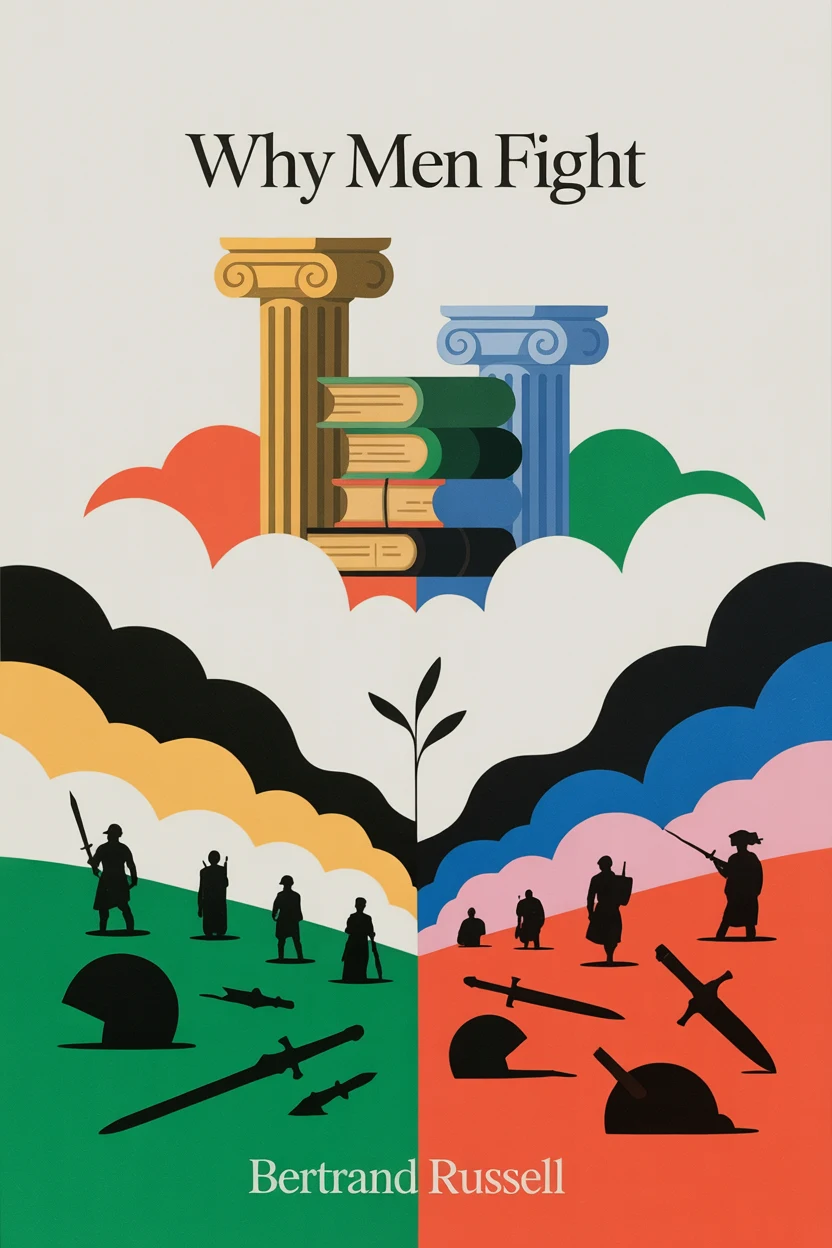
Why Men Fight, published in 1916 during the height of World War I, is Bertrand Russell's profound philosophical examination of human conflict, social organization, and the possibilities for lasting peace. Originally titled Principles of Social Reconstruction in Britain, this work emerged from Russell's pacifist convictions and his opposition to the Great War, which had cost him his lectureship at Trinity College, Cambridge. The book explores fundamental questions about why societies engage in destructive conflicts and what psychological, economic, and political forces drive individuals and nations toward violence rather than cooperation.
Russell structures his analysis around key social institutions including the state, property, marriage, education, religion, and war itself. He argues that many human conflicts arise from possessiveness and the desire to control others, whether through economic domination, political power, or social conformment. Rather than viewing human nature as inherently violent, Russell contends that social structures and institutions channel natural human impulses in destructive directions. He advocates for what he calls creative impulses over possessive ones, arguing that society should be reorganized to foster individual growth, genuine education, and meaningful work rather than competition and acquisition. His vision includes economic reform, educational transformation that respects individual development, and political structures that allow for greater personal freedom while maintaining social cohesion.
The historical significance of Why Men Fight lies in its bold challenge to wartime nationalism and its ambitious attempt to envision alternatives to the destructive social order of early 20th-century Europe. Russell's pacifist stance, articulated while his country was at war, demonstrated remarkable moral courage and intellectual independence. The book influenced progressive thought on education, peace movements, and social reform throughout the 20th century. Today, it remains relevant for its penetrating analysis of how institutions shape human behavior and its insistence that peace requires not merely the absence of war but fundamental changes in how societies are organized, how children are educated, and how individuals relate to power and authority.