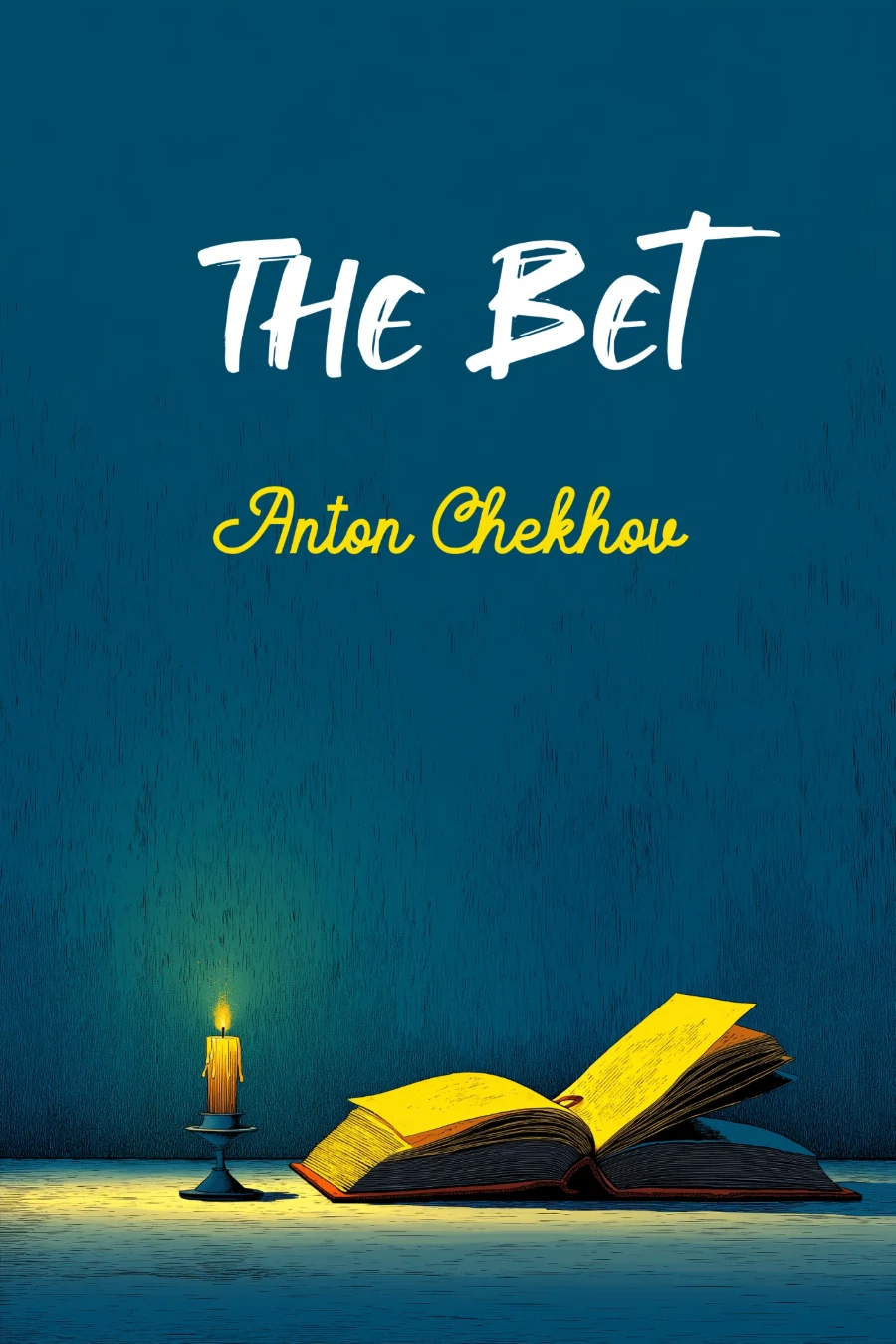
The Bet
At a lavish party among Russia's intellectual elite, a heated argument erupts over capital punishment and life imprisonment. Which is more humane, more moral? A wealthy banker argues that death is preferable to lifelong captivity, while a young lawyer insists that any life is better than no life at all. The debate escalates into a shocking wager: the lawyer will voluntarily confine himself in total isolation for fifteen years, and if he succeeds, the banker will pay him two million rubles. What begins as a moment of reckless passion—fueled by wine and pride—transforms into a binding agreement that will test the limits of human endurance and the true value we place on existence itself.
Chekhov constructs a psychological examination that moves through years in pages, tracking how prolonged solitude reshapes a mind and soul. The lawyer's cell becomes a laboratory where the prisoner moves through distinct phases of despair, intellectual hunger, and transformation, sustained only by books, music, and wine passed through a small window. Meanwhile, the banker's fortune rises and falls with the tides of circumstance, and the approaching deadline begins to weigh on him with increasing dread. The story probes unsettling questions about what we surrender when we choose material wealth over freedom, or freedom over wealth, and whether wisdom can be found in self-imposed exile from the world.
This brief work endures because it refuses easy answers about human nature and our hierarchy of values. Chekhov writes with characteristic restraint, allowing the stark situation to generate its own philosophical weight without didacticism. The story rewards readers who appreciate moral complexity, who want to sit with uncomfortable questions about sacrifice, meaning, and whether our convictions can survive when put to their ultimate test. It's a tale that lingers long after its final page, prompting reflection on what we would endure, and what we would become, for our beliefs.