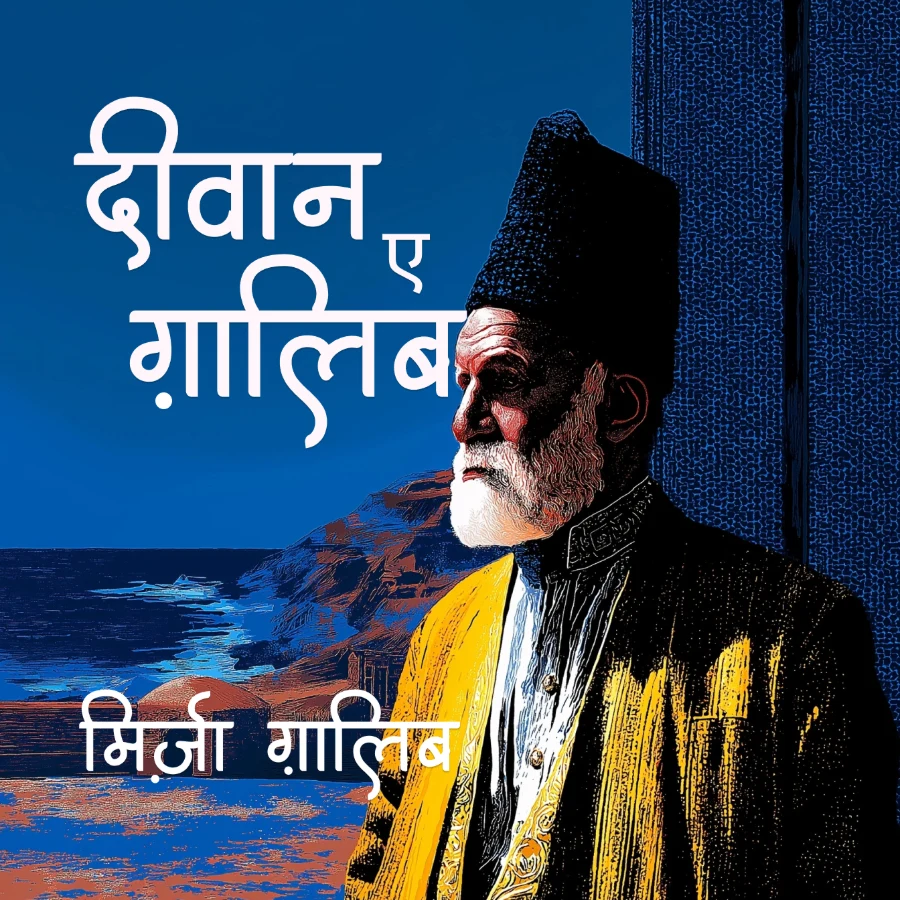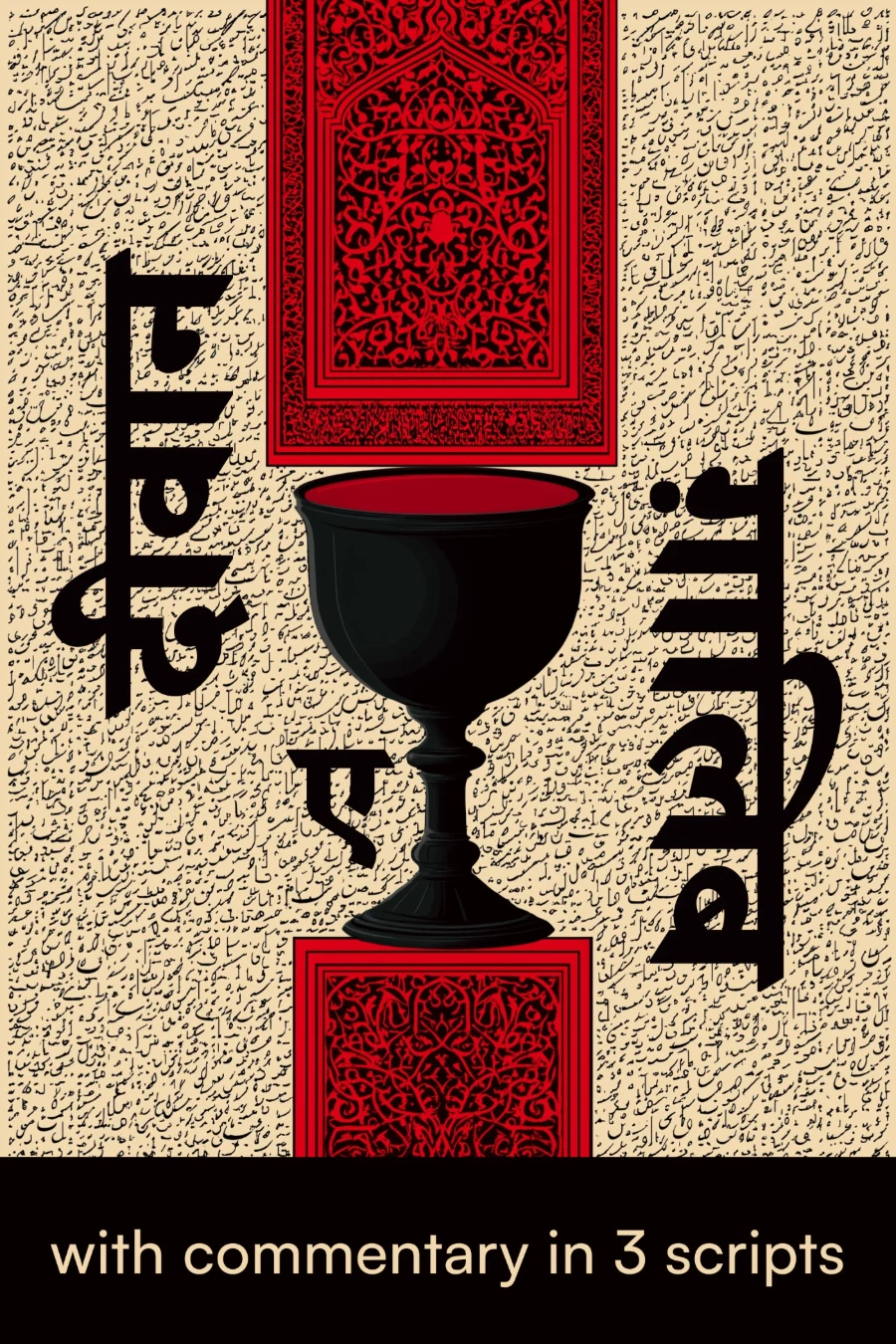
Divan-e-Ghalib
Translated by Frances W. Pritchett
This book is available in 3 scripts, each verse with meanings and commentary. Thanks to the works of Frances W. Pritchett.
Divan-e-Ghalib is the collected poetic works of Mirza Asadullah Khan Ghalib, widely regarded as the greatest Urdu and Persian poet of the 19th century. Compiled during his lifetime in Delhi, this anthology contains ghazals, qasidas, and other poetic forms that revolutionized Urdu poetry through their complex metaphysical imagery, philosophical depth, and innovative use of language. Rather than following a narrative structure, the work presents individual poems that explore themes of love, loss, existential questioning, the relationship between humanity and the divine, and the nature of reality itself. Ghalib's verses are characterized by their layered meanings, where seemingly simple couplets about romantic love often contain profound philosophical inquiries about existence, fate, and human suffering.

The themes that permeate the Divan reflect both classical Persian-Urdu literary traditions and Ghalib's unique modernist sensibility. His treatment of love transcends mere romantic sentiment, delving into metaphysical concepts where the beloved becomes a mirror for divine beauty and existential truth. The poet grapples with questions of predestination versus free will, the pain of unfulfilled desires, and the paradoxes inherent in human existence. His work also captures the melancholy of witnessing the decline of Mughal civilization, as he lived through the turbulent period leading to the 1857 Rebellion and the final collapse of the Mughal Empire, lending his poetry a poignant historical resonance.
The historical and literary significance of Divan-e-Ghalib cannot be overstated in South Asian literature. Ghalib's innovations in language, his departure from conventional poetic imagery, and his integration of philosophical complexity into the ghazal form fundamentally transformed Urdu poetry and influenced generations of writers across the Indian subcontinent and beyond. His work bridges classical Persian literary traditions with a distinctly modern sensibility, making him relevant to contemporary readers. The Divan remains essential reading for anyone interested in Urdu literature, South Asian culture, or world poetry, continuing to be studied, recited, and celebrated more than 150 years after his death.