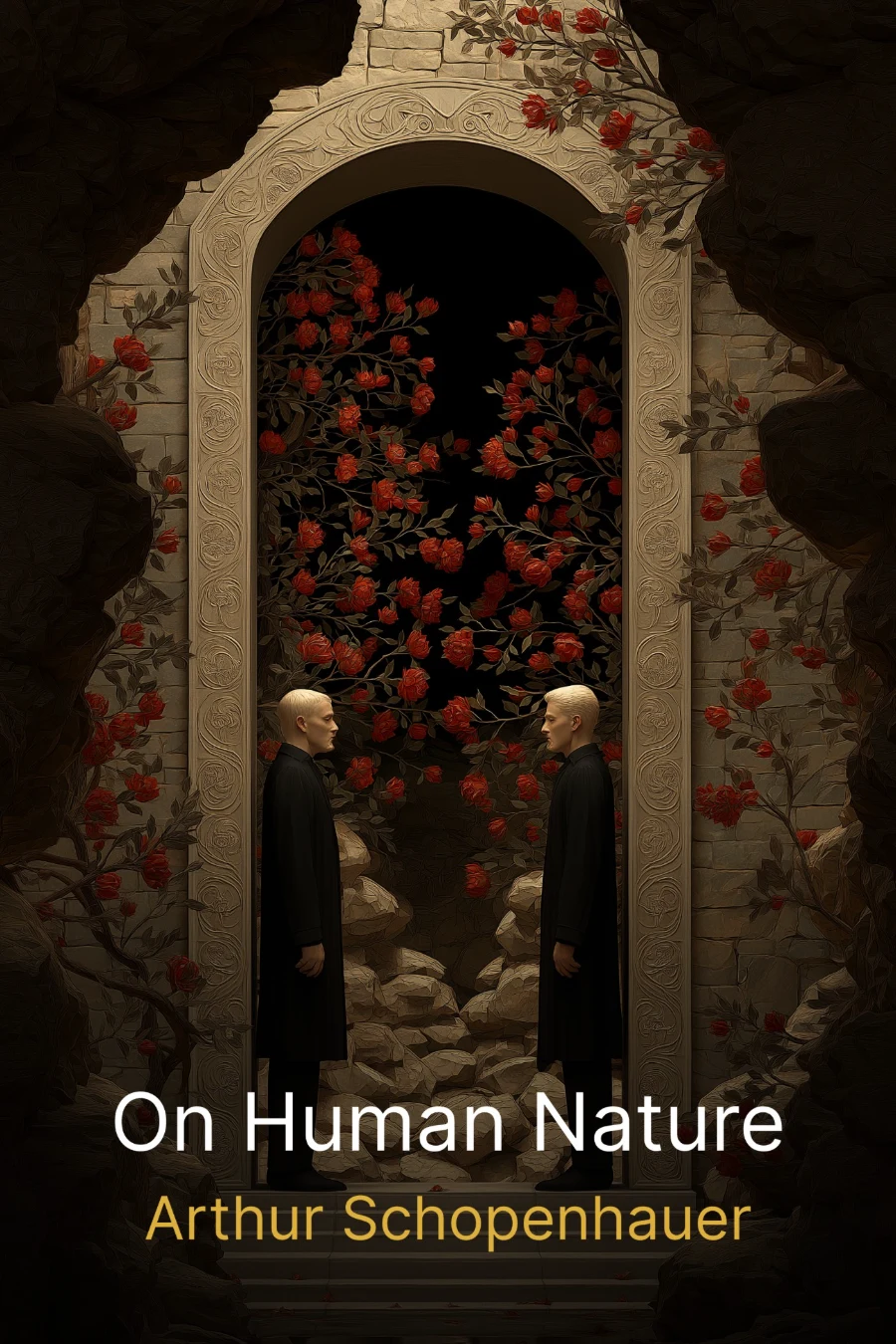
On Human Nature
Translated by T. Bailey Saunders
2h 41m
32,145 words
en
On Human Nature collects Schopenhauer's essays from Parerga und Paralipomena (1851) on the questions that follow once you accept his bleaker conclusions: how does character actually form, what is moral action grounded in, how should the state organise the wills of millions of self-interested animals, and is the will free in any meaningful sense? His answers are unsparing — character is largely fixed at birth, ethics rests on compassion rather than reason, the state is a necessary cage, and freedom is a useful illusion — but they are argued with the clarity that makes Schopenhauer one of philosophy's great prose stylists. Translated by T. Bailey Saunders in 1897.