In Praise of Idleness
25 min
4,955 words
en
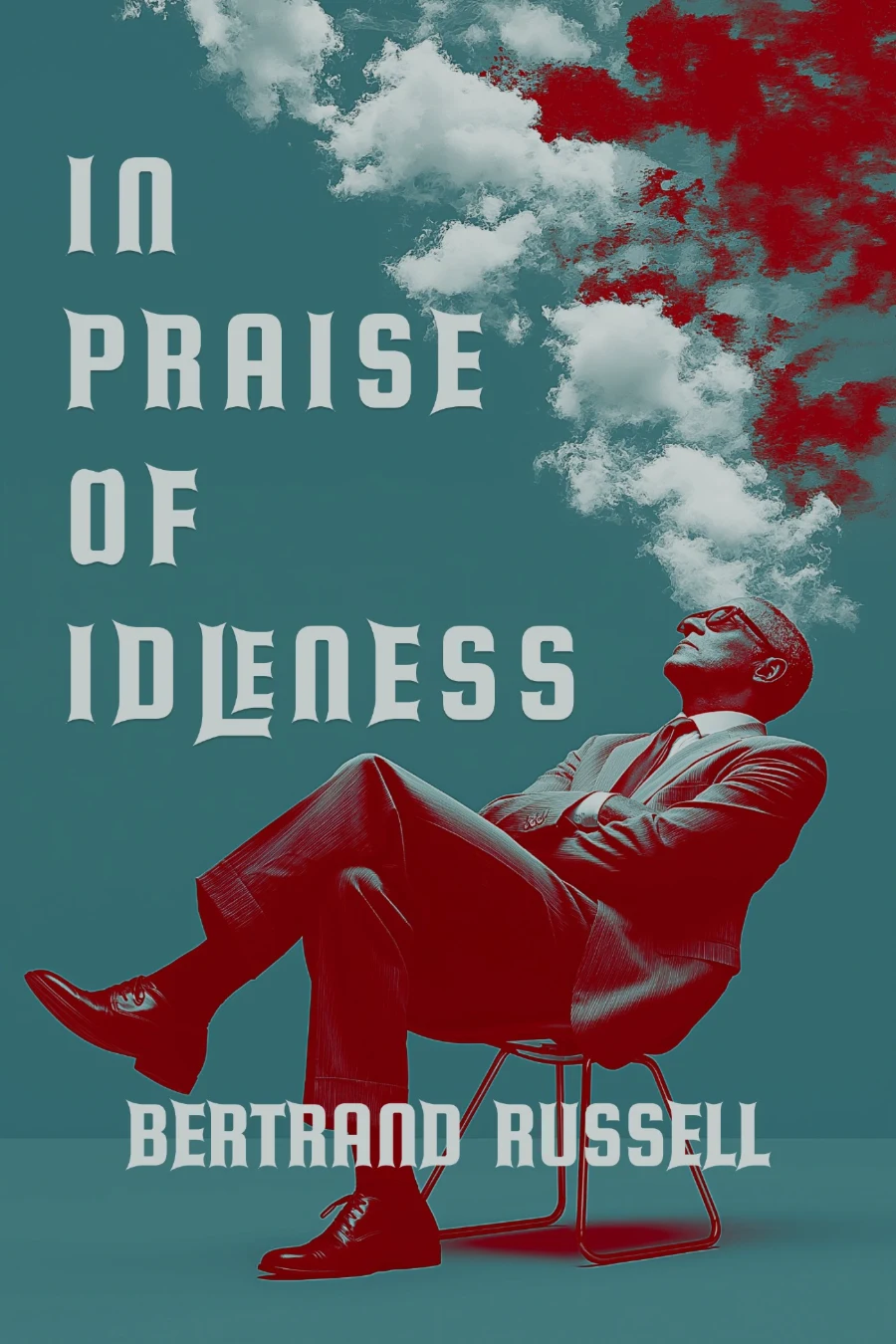
In Praise of Idleness is a provocative collection of essays published in 1935 by philosopher and mathematician Bertrand Russell, with the title essay originally appearing in 1932. The book challenges fundamental assumptions about work, productivity, and the organization of modern society. Russell's central argument dismantles the prevailing work ethic that dominates Western civilization, proposing instead that a four-hour workday would be sufficient for meeting society's material needs while allowing humans to pursue intellectual, creative, and leisurely activities that constitute a truly fulfilling life. He critiques how the working class has been indoctrinated to view constant labor as virtuous while the wealthy have historically enjoyed leisure without guilt, and argues that technological advancement should reduce working hours rather than increase unemployment or concentrate wealth.
The collection explores themes of social justice, education, economic reform, and human happiness across multiple essays. Russell examines how the education system perpetuates class divisions and conformity rather than fostering critical thinking and creativity. He discusses the relationship between industrialization and human welfare, arguing that society's obsession with production and consumption creates artificial needs while ignoring genuine human flourishing. His critique extends to militarism, nationalism, and the ideological systems that keep populations subservient to economic elites. Throughout, Russell advocates for a rational reorganization of society that would distribute both labor and leisure more equitably.
This work remains historically significant as both a product of its time and a prescient document for contemporary debates. Written during the Great Depression, Russell's ideas responded to the paradox of technological abundance coexisting with mass unemployment and poverty. His arguments anticipated modern discussions about automation, universal basic income, work-life balance, and the purpose of human existence in an age of potential material abundance. The book represents Russell's commitment to social activism and demonstrates how rigorous philosophical thinking can address practical political and economic questions. Its enduring relevance lies in its challenge to the assumption that human worth should be measured by productive output, offering instead a vision of society organized around human wellbeing, intellectual development, and the cultivation of joy.
Non-FictionEssaysPhilosophyPolitical ScienceWestern Philosophy20th CenturyBritish PhilosophySocial Criticism
LanguageEnglish
Source