De Humani Corporis Fabrica
22 min
4,215 words
en
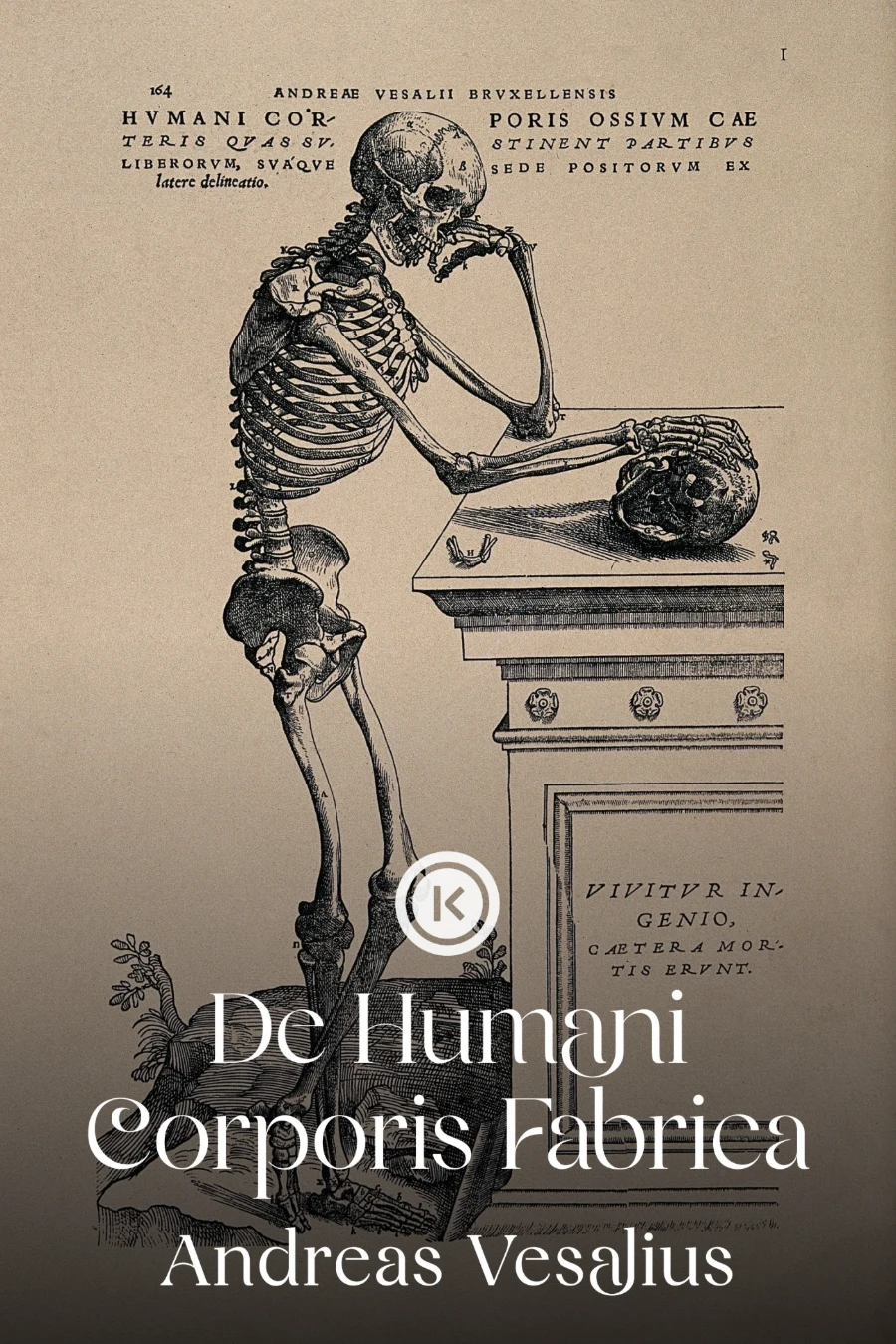
Twenty-seven woodcuts from Andreas Vesalius's De Humani Corporis Fabrica — the 1543 anatomical atlas that founded modern medicine and remains one of the most beautiful scientific books ever printed. Vesalius was a 28-year-old Flemish anatomist teaching at the University of Padua when he published the Fabrica, dissecting human cadavers himself rather than relying on the ancient texts of Galen as every medical authority before him had done. The result corrected centuries of error and produced illustrations of unprecedented accuracy and grandeur. The famous "muscle men" of Book Two — flayed figures who stride and gesture across an Italian landscape — gradually decompose page by page, each plate showing a deeper layer until only the skeleton remains. The skeleton plates of Book One are equally extraordinary: a thinking skeleton leans on a tomb, contemplating a skull. Whoever drew these images — possibly Jan Stephan van Calcar of Titian's workshop in Venice — combined the new humanist aesthetic with the new science. This collection presents the great figure plates from each of the seven books and the title page where Vesalius himself stands at the dissection table while a chaotic crowd presses around him.
Artanatomyscientific illustrationAndreas VesaliusRenaissancewoodcutsmedical historyDe Humani Corporis Fabrica
PublisherKafka, Kafka Originals
LanguageEnglish
Source
Wikimedia CommonsWellcome CollectionNational Library of Medicine