The Birds of America
28 min
5,432 words
en
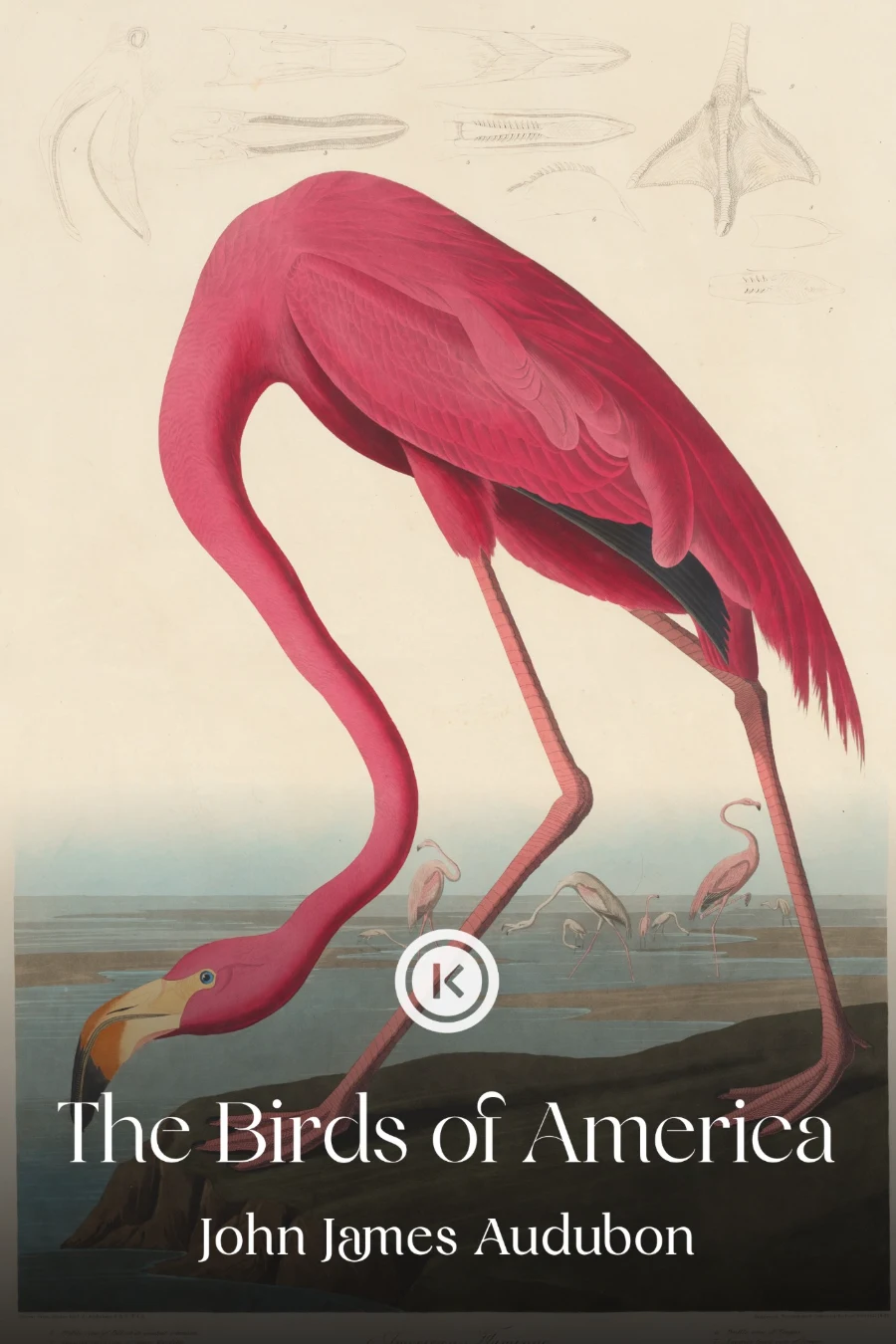
Thirty-four hand-colored aquatint plates from John James Audubon's Birds of America — published in London between 1827 and 1838 as the most ambitious and most expensive book ever attempted up to that point. Audubon, a self-taught Haitian-born French-American who failed at every business he tried, set out to paint every bird species in North America at life size, on sheets of paper measuring nearly 100 by 70 centimeters — what bibliographers call "double elephant folio." The result is one of the few books that can stand as a work of art, a work of science, and a work of national mythology at once. Audubon shot his subjects himself, then wired the bodies into lifelike poses to draw them — the only way, before photography, to render a bird in motion. His birds eat, fight, flirt, hunt, brood, and die: the Wild Turkey strides across the title plate; the Carolina Parakeet — now extinct — clusters in vivid green; the Passenger Pigeon, also extinct, perches in pairs against a bare branch. This collection presents Audubon's most celebrated plates, including the Whooping Crane, the American Flamingo bowing impossibly to fit the page, the Ivory-billed Woodpecker, and the White-headed Eagle that became the symbol of his adopted country.
PublisherKafka, Kafka Originals
LanguageEnglish
Source
Wikimedia CommonsPublic domain museum collections