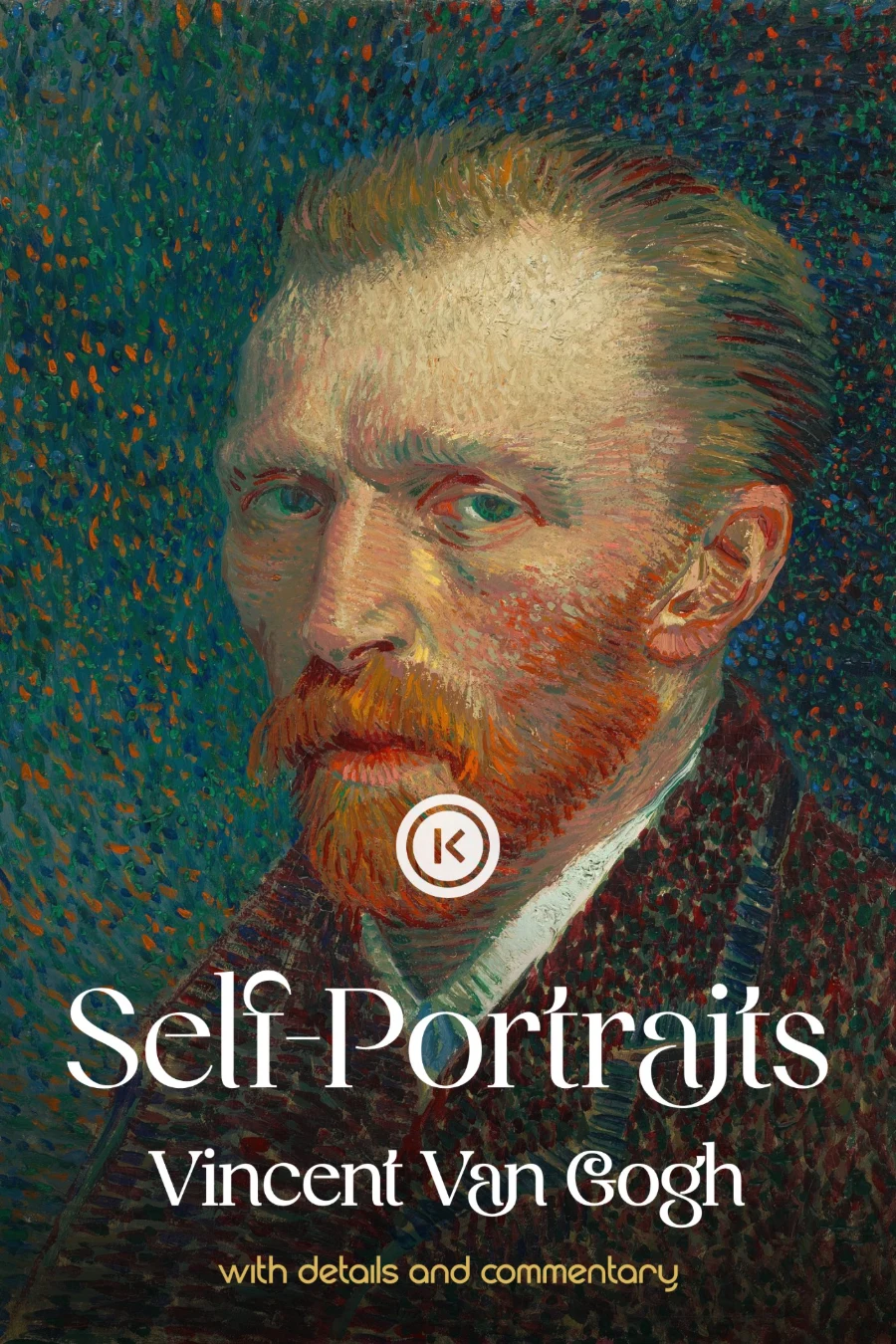
Self-Portraits
23 min
4,415 words
en
Twenty-four self-portraits spanning Van Gogh's artistic life — from the dark, tentative early works painted in Antwerp and Paris to the swirling, psychologically penetrating images of his final years. No artist has left a more honest or more harrowing record of self-examination. Van Gogh painted himself because he could not afford models, but the necessity became a compulsion: each portrait is a confrontation with his own changing face, his own shifting mental state, his own relentless artistic evolution. The early portraits are dark and Dutch; the Parisian portraits explode into color as he discovers Impressionism; the Arles and Saint-Rémy portraits — bandaged ear, asylum background, haunted green eyes — are among the most psychologically intense images in the history of art. Together they form an autobiography in paint, more revealing than any written confession.
PublisherKafka, Kafka Originals
LanguageEnglish
Source
Wikimedia CommonsPublic domain museum collections