The Crocodile
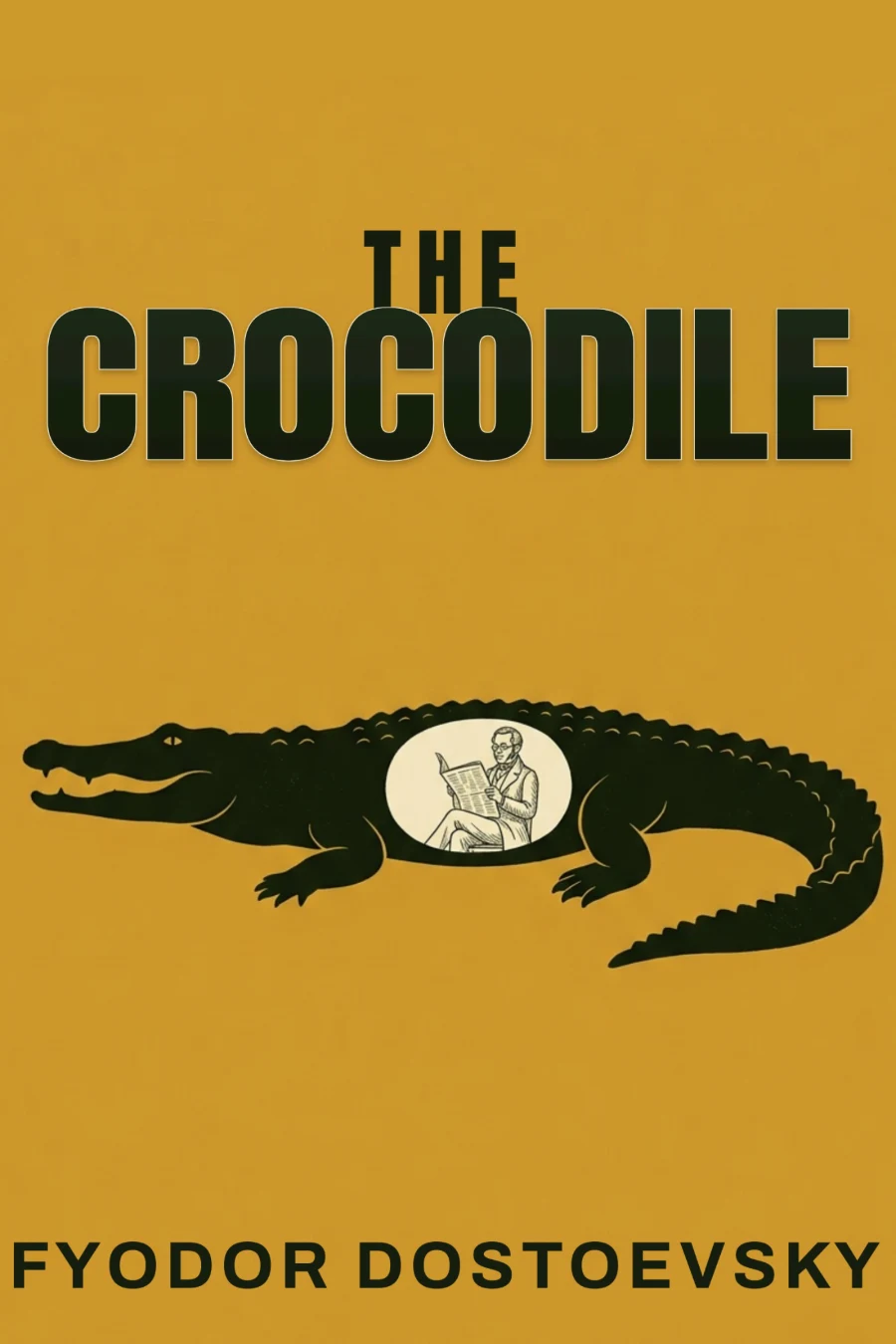
On a fine winter morning in 1865, Ivan Matveitch, a Petersburg civil servant with a small reputation and high opinions, takes his wife Elena Ivanovna and his friend the narrator to see a German showman's crocodile that has been exhibited in the Arcade. Pressing his nose too close to the glass, Ivan Matveitch is swallowed alive. The crocodile shows no further interest in him; the showman refuses to disembowel a five-thousand-rouble investment; Ivan Matveitch, after a few minutes of muffled scuffling, declares from inside the animal that he is comfortable and intends to remain. He begins, from his new position, to dictate a series of essays on the economic future of Russia.
Dostoevsky serialised The Crocodile in 1865 in his journal Epoch. It was an open jab at the imprisoned radical theorist Nikolai Chernyshevsky, whose What Is to Be Done? Dostoevsky considered the most dangerous book of the century — and the satire so transparent that the censor cut it short. Beneath the literary fight is a perfectly preserved sample of mid-1860s Petersburg: the Passage arcade, the German showman, the deputy directors of the Department, the tea-rooms, the wife managing her sudden celebrity, all rendered with the slow comic precision that Dostoevsky almost never let himself use elsewhere.
The Crocodile rewards readers who want a side of Dostoevsky the novels suppress — the journalist, the polemicist, the comic stylist who could spend three thousand words on the question of whether a swallowed civil servant is still entitled to his pension. It rewards them with one of the funniest pieces in nineteenth-century Russian literature, and with the rare experience of watching the author of Crime and Punishment make a joke last for forty pages.