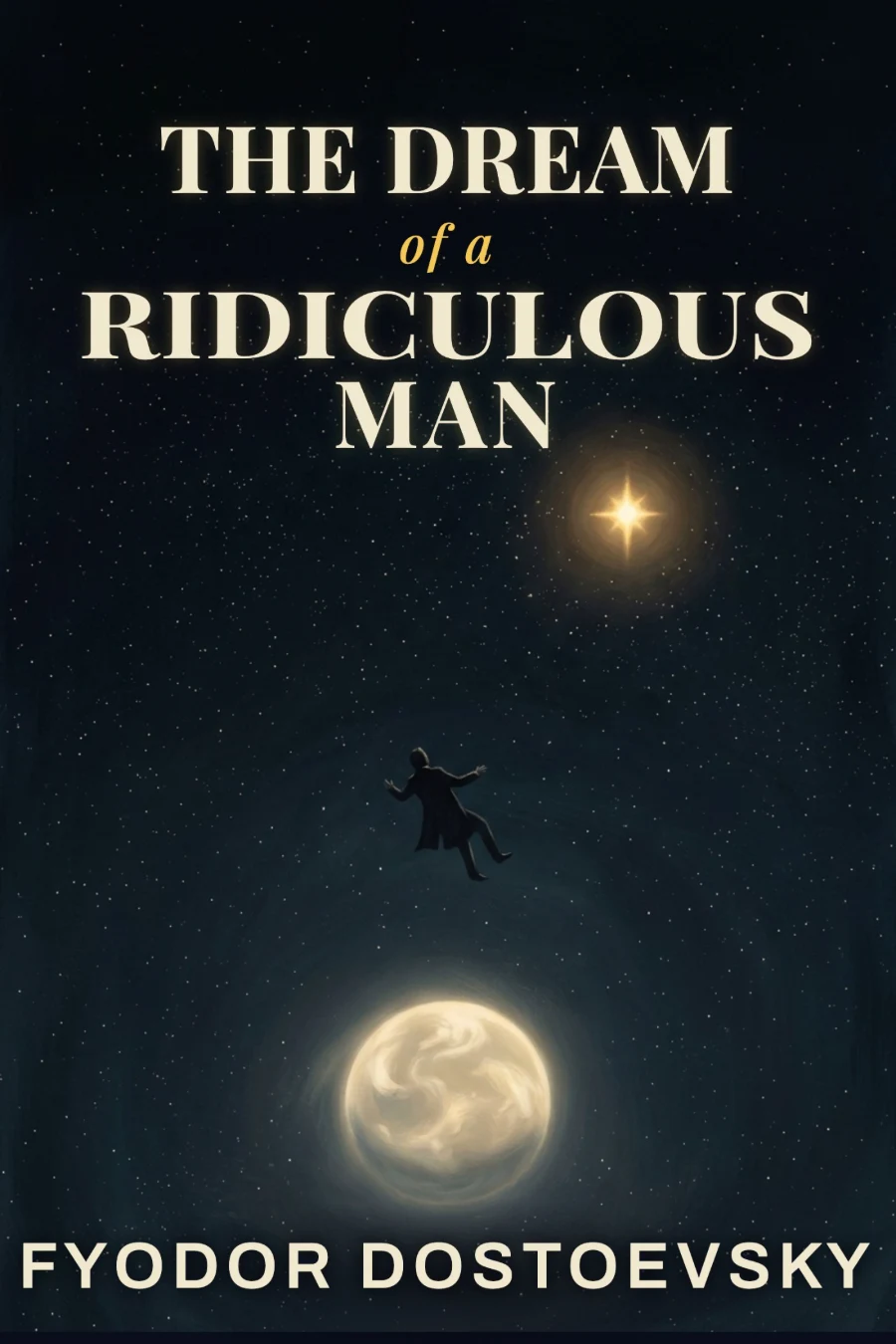
The Dream of a Ridiculous Man
44 min
8,624 words
en
A nameless Petersburg gentleman sits in his room on a wet November night and prepares, calmly, to shoot himself. He has known for months that nothing in the world matters; he has stopped feeling shame, anger, or pity; he is, by his own account, a perfectly ridiculous man. On the way home through the rain he ignores a small girl pleading for help, and the ignored plea — for reasons he cannot explain — keeps him from pulling the trigger. He falls asleep in the armchair instead, and dreams.
Dostoevsky published The Dream of a Ridiculous Man in his Diary of a Writer in April 1877, four years before his death. It is the most condensed expression of the late religious vision that runs through The Brothers Karamazov — the dream takes the narrator to an unfallen earth where humanity has never sinned, and then, in the second half, he watches helplessly as his own arrival corrupts that paradise into a recognisable version of our own world. The structure is a parable, the voice is the underground-man's nervous self-laceration, and the climax is one of Dostoevsky's strongest defenses of an idea he otherwise distrusted: that the truth, once seen, must be lived even if it cannot be argued.
The Dream of a Ridiculous Man rewards readers who want late Dostoevsky in his most distilled form — the philosophical urgency of The Brothers Karamazov, the psychological self-attack of Notes from Underground, and the parable economy of How Much Land Does a Man Need? all in twenty-five pages. It rewards them with the only Dostoevsky ending that genuinely consoles, and with a final sentence — the search for the small girl — that turns the entire metaphysical adventure back into a single ordinary act.
Russian fictionShort stories, Russian--Translations into EnglishSuicide--FictionUtopias--FictionReligious fictionPhilosophical fiction
PublisherKafka
LanguageEnglish
Source
dream-ridiculous-man-dostoevsky