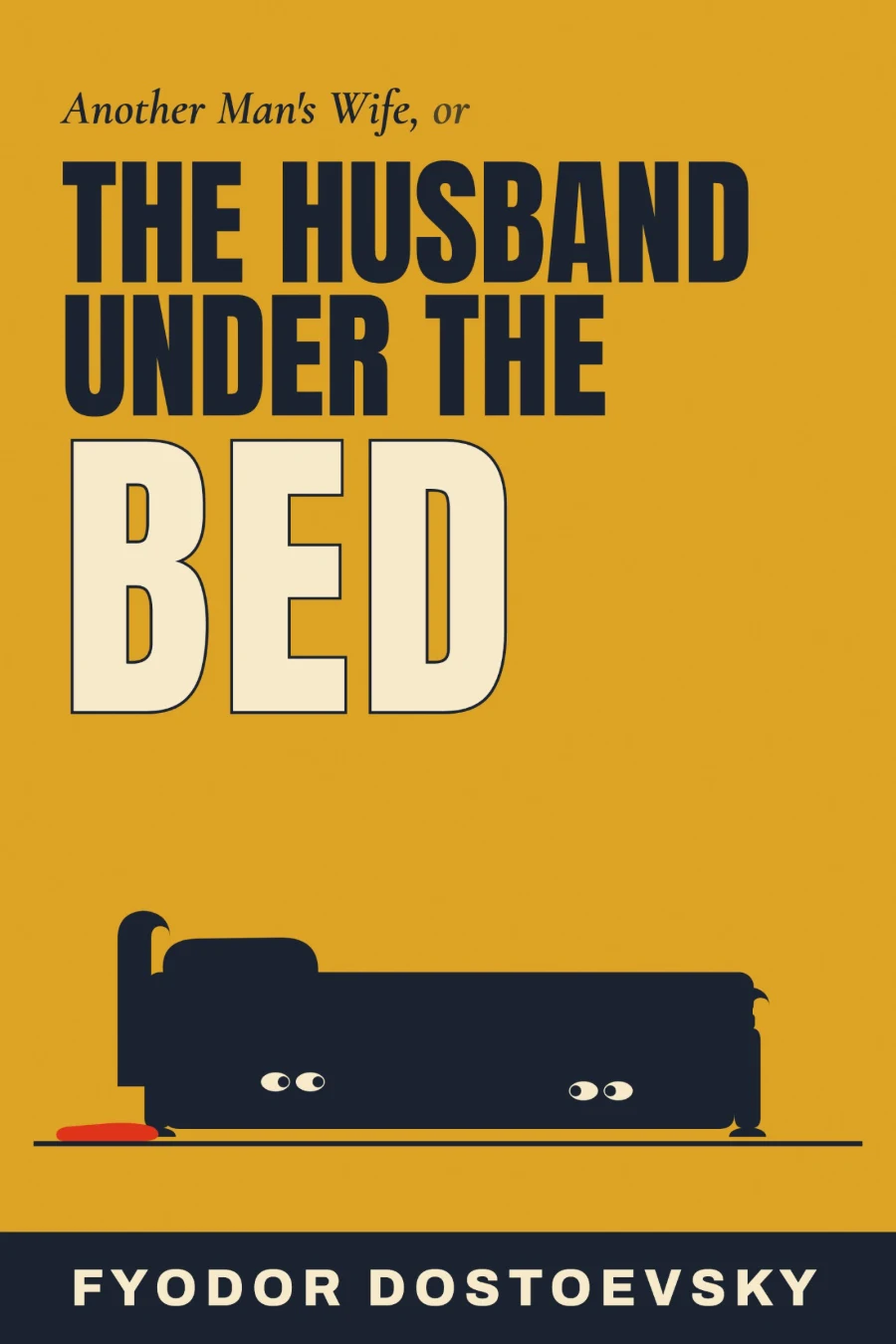
Another Man's Wife, or The Husband Under the Bed
On a winter evening in Petersburg, Ivan Andreyevich follows his wife — he is certain she is being unfaithful — to a building near the Bolshoi Theatre. While interrogating a stranger on the boulevard about a woman in a fur coat, he is forced by sudden circumstance into the apartment of a household where he has no business, and ends up flat on his stomach under a stranger's bed. There, in the dust and the dark, he discovers a second man already in hiding: another jealous husband, with another wife, in another part of the building, who has miscalculated his own ambush by exactly one bed.
Dostoevsky published this comic novella in 1848, in two parts under the half-titles "Another Man's Wife" and "The Husband Under the Bed"; the full Russian title combines both. It is the most purely farcical thing he ever wrote, descended directly from the French vaudeville tradition and from Gogol's Petersburg sketches, and is structured as a precise mechanism of escalating misunderstandings — the wrong overcoat, the wrong dog, the wrong note, the wrong bed. Most of the dialogue is performed in the half-whisper of two men trying to remain undetected while becoming increasingly enraged at each other.
Another Man's Wife, or The Husband Under the Bed rewards readers who know Dostoevsky only from the heavy novels and want to see his stage-comedy reflexes operating at full pace — the same psychological precision applied to absolute comic farce, with no metaphysics in sight. It rewards them with one of the funniest twenty-page sequences in Russian literature, written by a twenty-six-year-old who already understood that the most exact instrument for studying a man is to put him somewhere he should not be and let him find his way out.