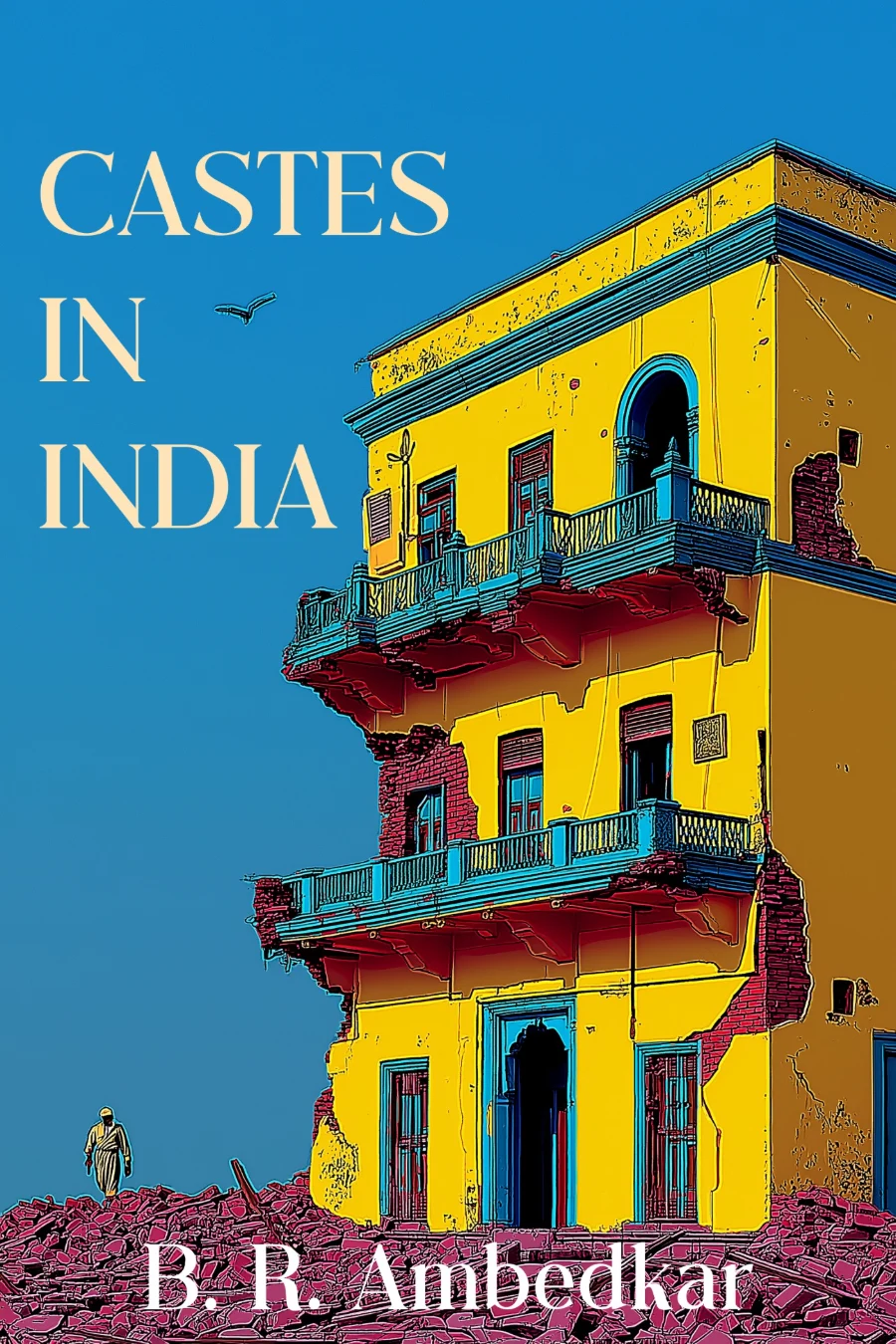
Castes in India: Their Mechanism, Genesis and Development
Read before the Anthropology Seminar of Dr. A. A. Goldenweiser at Columbia University on 9 May 1916 and later printed in *The Indian Antiquary* (Vol. XLVI, 1917), this is one of B. R. Ambedkar's earliest published writings — composed when he was twenty-five and still a graduate student in New York. Reviewing the definitions of caste offered by Senart, Nesfield, Risley and Ketkar, Ambedkar concludes that endogamy is the only characteristic peculiar to caste, and that the customs of sati, enforced widowhood and girl marriage are the mechanisms by which an originally exogamous Hindu society parcelled itself into closed castes. Drawing on Gabriel Tarde's laws of imitation, he argues that caste spread from the Brahmans downward through imitation and excommunication. The paper sets out the analytical framework Ambedkar would later develop in *Annihilation of Caste* and his other writings on the social structure of Hindu India.