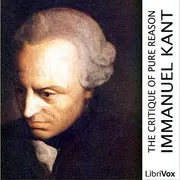
Critique of Pure Reason
35 min
6,938 words
en
In the wake of David Hume's empiricism, eighteenth-century philosophy faced a crisis regarding what human beings can actually know. This treatise intervenes by synthesizing rationalism and empiricism. It concedes that "all our knowledge begins with experience," before introducing a fundamental pivot: not all knowledge arises out of experience. Instead, the mind itself brings necessary structure to the raw material of the senses.
To prove this, the text isolates what belongs to our cognitive faculties and what belongs to the world. It draws a strict boundary between phenomena—things as they appear to us—and the noumenal realm of things as they exist independently. It outlines the conditions for synthetic a priori knowledge and diagrams the antinomies of reason, mapping the contradictions the mind encounters when it attempts to grasp concepts beyond empirical evidence.
First published in 1781 and revised in 1787, this critique fundamentally reoriented Western metaphysics. It initiated German Idealism and established the framework for modern critical philosophy. Translated by Norman Kemp Smith.
PhilosophyEpistemologyMetaphysicsGerman Idealism18th CenturyEnlightenmentCritical PhilosophyTranscendental IdealismRationalismEmpiricismLogicKantPure ReasonA Priori KnowledgeSynthetic A Priori
LanguageEnglish