Animal Farm

Animal Farm

George Orwell

2h 31m
30,023 words
en

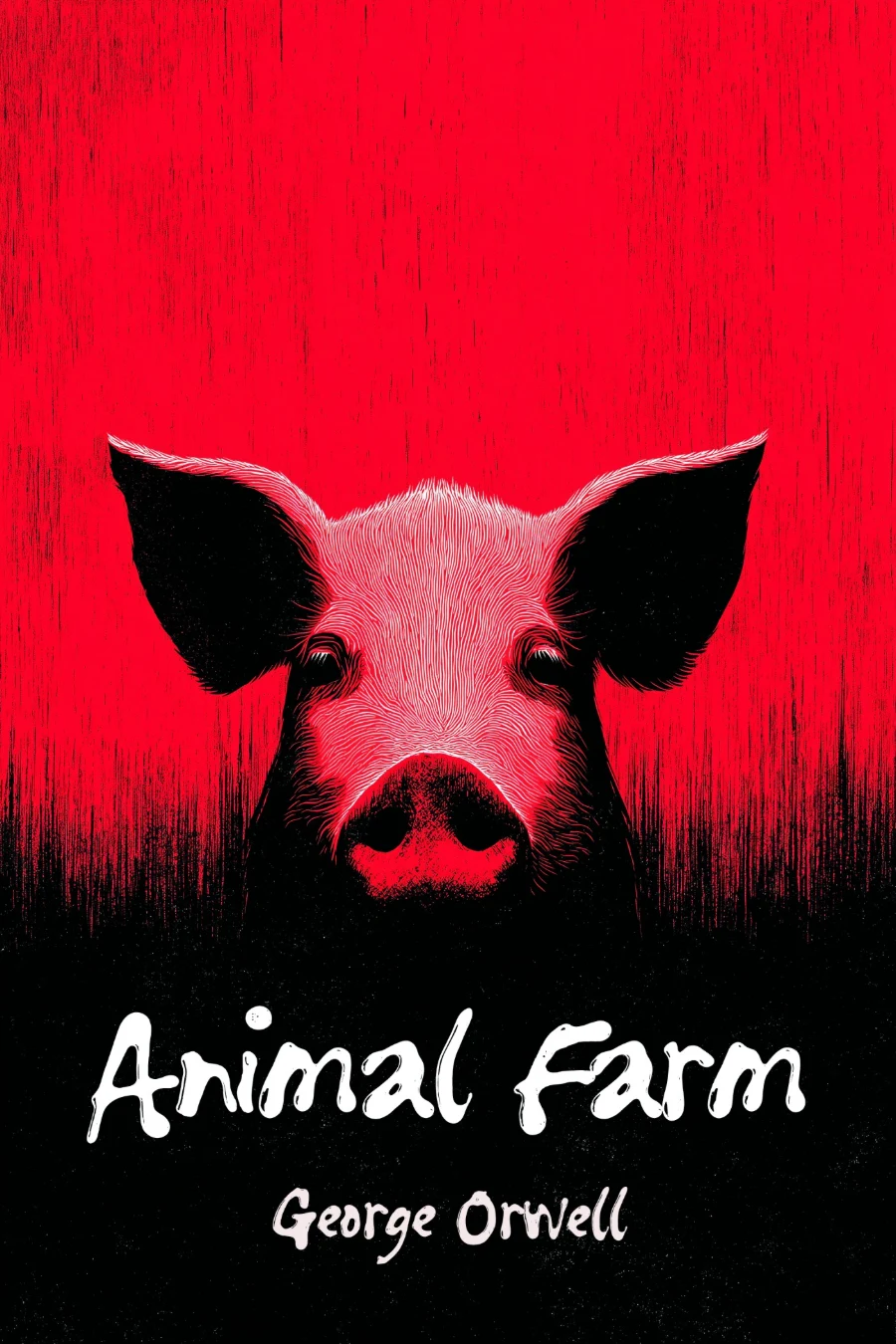
Animal Farm is George Orwell's brilliant allegorical novella published in 1945 that uses a seemingly simple farmyard tale to deliver a devastating critique of totalitarianism and the corruption of revolutionary ideals. The story follows a group of farm animals who overthrow their human owner, Mr. Jones, and attempt to create an equal society based on the principles of Animalism. Led initially by the pigs Snowball and Napoleon, the animals establish a system where all creatures are meant to be equal. However, as time passes, the pigs gradually assume more power and privileges, with Napoleon eventually emerging as a dictator who uses propaganda, violence, and manipulation to control the other animals. The famous commandment "All animals are equal" becomes twisted into "All animals are equal, but some animals are more equal than others," perfectly encapsulating the betrayal of the revolution's original ideals.

The novella serves as a pointed allegory for the Russian Revolution and the rise of Stalinism, with characters and events directly paralleling historical figures and moments—Napoleon represents Stalin, Snowball represents Trotsky, and the various animals represent different segments of Soviet society. Orwell, a democratic socialist himself, was deeply concerned with how the Soviet Union had betrayed socialist principles, and he crafted this accessible fable to expose how revolutionary movements could be hijacked by those seeking personal power. The book explores timeless themes including the corrupting nature of power, the manipulation of language and truth for political ends, the danger of an uneducated populace, and how those in power rewrite history to maintain control.

Animal Farm remains profoundly relevant beyond its historical context, standing as one of the most important political satires of the 20th century. Its clear prose and deceptively simple structure make complex political ideas accessible to readers of all ages, which is precisely why it has become a staple of educational curricula worldwide. The book's warning about how noble ideals can be corrupted and how propaganda can obscure reality resonates across any political system or era, making it essential reading for understanding how authoritarianism emerges and sustains itself in any society.

LanguageEnglish
Source
FadedPages