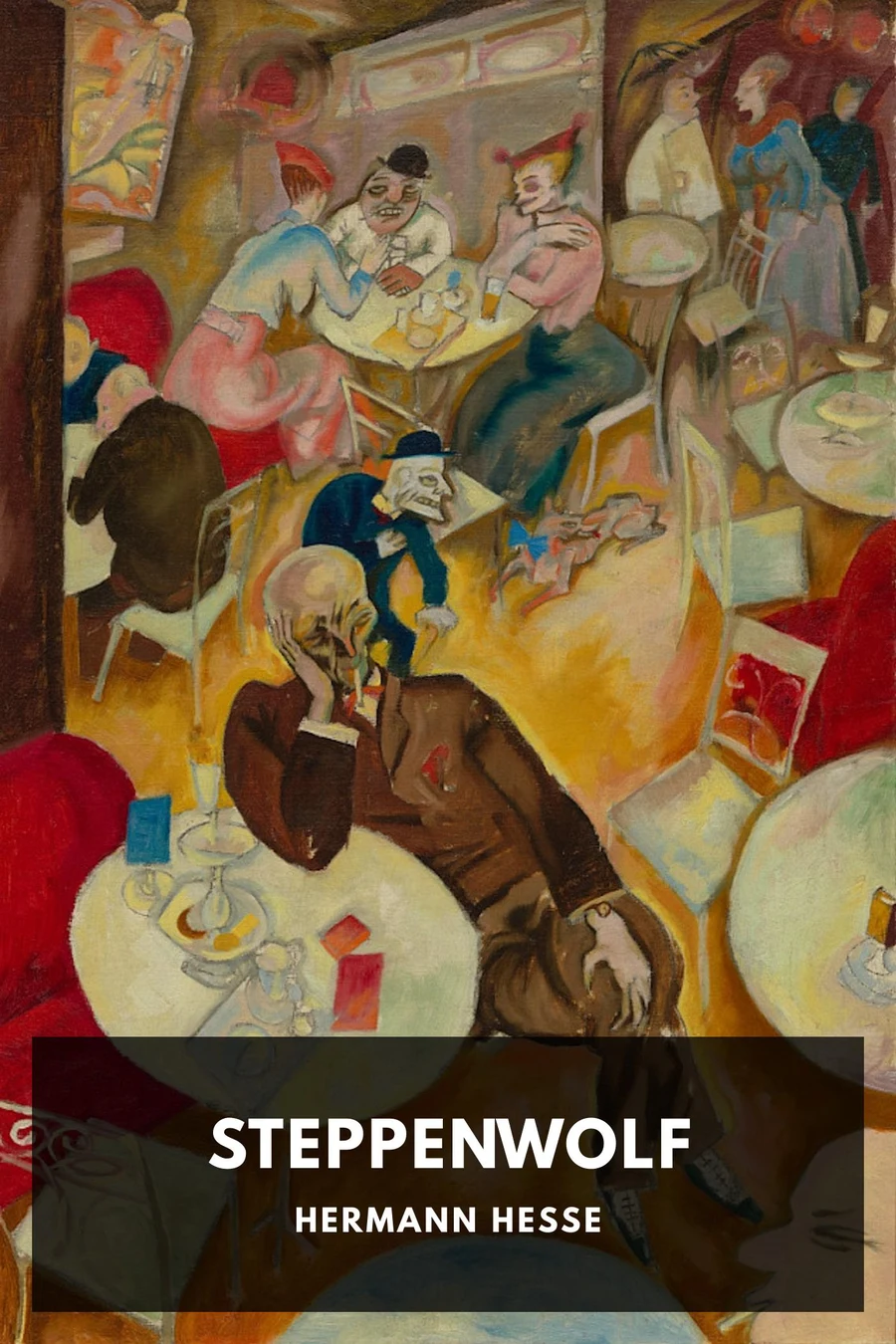
Steppenwolf
Harry Haller, once a respected intellectual, now finds himself an outsider in society. During a depressed walk through town, he meets a mysterious stranger who gives him a pamphlet on the “Steppenwolf,” a man who believes himself split into two parts: one cultured and humane, and the other animalistic and violent. Like many people, the Steppenwolf is cursed to suffer because he considers these two spirits to be in conflict, instead of recognizing that they’re but two facets of the infinite multitude of personalities within everyone. Harry reads this pamphlet with great interest, believing it to describe his own life. Later, he’s introduced to the wild lifestyle of the bourgeois: dancing, drug use, and sex. This radically different lifestyle helps him reconcile his personalities and find purpose in life. In some places, Steppenwolf follows the despair and spiritual crises that Herman Hesse himself felt in the mid-1920s. Due to its depictions of drug use and sex, it quickly became highly controversial; perhaps for that reason it gained a significant following in the counterculture movement of the 1960s. Today it’s regarded as a classic of existentialist literature, and is often compared to other works by Hesse, in particular Siddhartha. Hesse later claimed that Steppenwolf was his most misunderstood novel, as critics focused on the struggle and despair of Harry, and not on his possible redemption.