Kafka
Kafka
Download AppDownload
AboutContactPrivacyTerms
Download App

© 2026 Kafka

  1. Home

  2. /
  3. A Hunger Artist
A Hunger Artist

A Hunger Artist

Franz Kafka

21 min
4,104 words
en
Start Reading

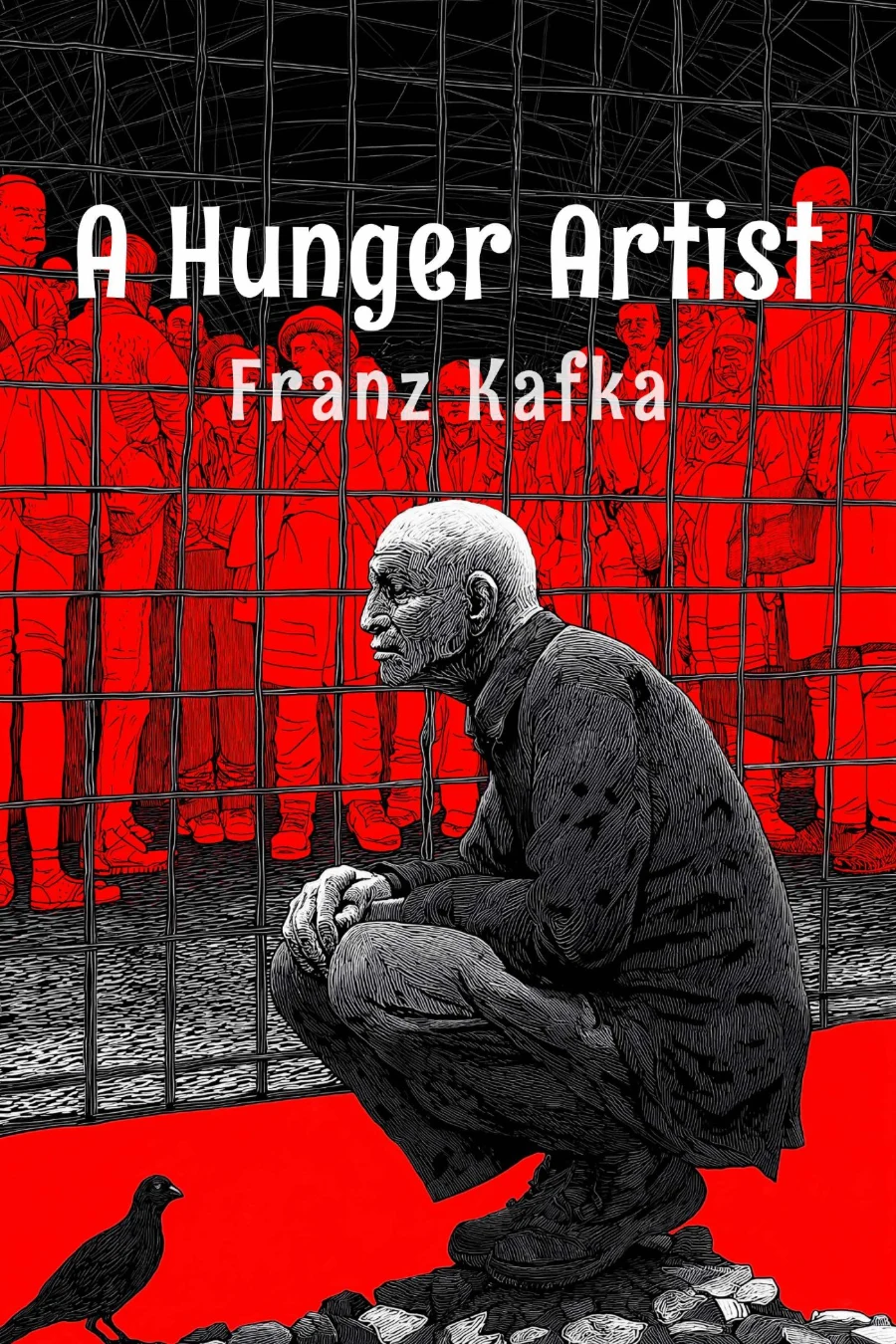
A Hunger Artist is a haunting short story by Franz Kafka, first published in 1922, that tells the tale of a professional faster who performs his art by starving himself in a cage for public entertainment. The protagonist is devoted to his craft with obsessive dedication, fasting for periods of forty days at a time while supervised by watchers who ensure he doesn't cheat. However, despite his genuine commitment to his art, he finds himself increasingly marginalized as public interest in hunger artistry wanes. Eventually, his impresario limits his fasts to forty days against his wishes, and as audiences dwindle, the hunger artist joins a circus where he is placed near the animal cages and largely forgotten. In the story's devastating conclusion, he is discovered near death, having fasted for an unknown but extremely long period, and confesses that he only fasted because he could never find any food that he liked.

The story explores Kafka's recurring themes of isolation, the artist's alienation from society, and the impossibility of achieving recognition for one's true self or authentic artistic vision. The hunger artist represents the modern artist struggling for meaning and validation in an indifferent or uncomprehending world, where genuine artistic dedication is misunderstood, commercialized, or simply ignored. His final confession complicates the narrative further, raising questions about whether his suffering stemmed from artistic integrity or mere physical necessity, and whether distinction between the two even matters when one's essential nature is misunderstood.

A Hunger Artist stands as one of Kafka's most significant later works, published shortly before his death from tuberculosis in 1924. The story reflects Kafka's own feelings about his writing and his sense that his literary gifts were unappreciated and would remain so after his death. Its exploration of the artist's relationship with audience, the commercialization of art, and the fundamental inability to communicate one's inner experience has made it a touchstone for modernist literature and critical theory. The work continues to resonate with contemporary discussions about artistic authenticity, the attention economy, and the human need for recognition and understanding.

FictionShort StoryModernist LiteratureExistentialismAllegoryPsychological FictionGerman LiteratureEarly 20th CenturyIsolationArt and the ArtistSelf-DestructionAlienationAbsurdismFastingPerformance ArtMortalitySufferingPublic SpectacleDecline of Traditional Art Forms
PublisherKafka
LanguageEnglish
Source
American Literature

Books by Franz Kafka

Letters to MilenaLetters to Milena
The Great Wall of ChinaThe Great Wall of China
Short FictionShort Fiction
Before the LawBefore the Law
A Report to an AcademyA Report to an Academy
An Imperial MessageAn Imperial Message
Up in the GalleryUp in the Gallery
Jackals and ArabsJackals and Arabs
In the Penal ColonyIn the Penal Colony
The JudgmentThe Judgment
The Hunter GracchusThe Hunter Gracchus
A Country DoctorA Country Doctor
DiariesDiaries
Letter to His FatherLetter to His Father
The TrialThe Trial
MetamorphosisMetamorphosis
The CastleThe Castle

Audiobooks by Franz Kafka

MetamorphosisMetamorphosis
Auf der GalerieAuf der Galerie
Großer LärmGroßer Lärm
A Country DoctorA Country Doctor
Franz Kafka Short StoriesFranz Kafka Short Stories

Similar books

Lord Peter Views the BodyLord Peter Views the Body
Short FictionShort Fiction
GooseberriesGooseberries
Plague ShipPlague Ship
King CoalKing Coal
GusevGusev
The RaspThe Rasp
BeauvalletBeauvallet
Rothschild’s FiddleRothschild’s Fiddle
SleepySleepy
Pastors and MastersPastors and Masters
The Cords of VanityThe Cords of Vanity
The Poisoned Chocolates CaseThe Poisoned Chocolates Case
The Sound and the FuryThe Sound and the Fury
DemianDemian
The MotherThe Mother
The Roman Hat MysteryThe Roman Hat Mystery
Oil!Oil!
FutilityFutility
The House by the RiverThe House by the River