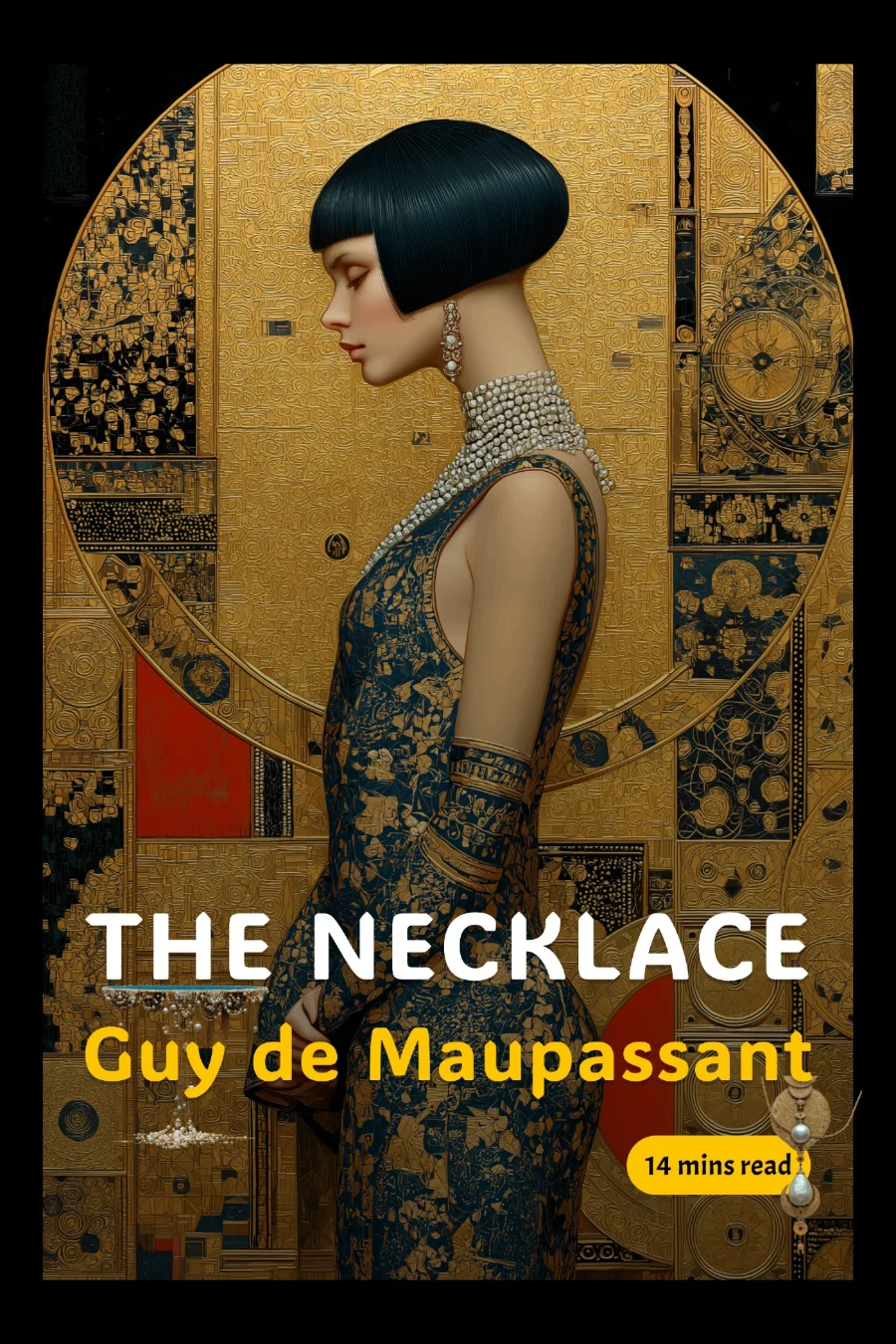
The Necklace
15 min
2,825 words
en
Mathilde Loisel lives in a Parisian apartment with bare walls and shabby chairs, married to a clerk at the Ministry of Public Instruction. Convinced she was born for luxuries and tall bronze candelabra, she suffers under the weight of her middle-class life. When an invitation to a Ministry ball finally arrives, she borrows a diamond necklace from a wealthy friend to look the part—only to realize it is gone by the end of the night.
Rather than confess the loss, the Loisels buy a replacement on credit. They sign promissory notes, deal with moneylenders, and surrender the next ten years of their lives to physical labor and poverty to pay off the ruinous debt.
Guy de Maupassant’s narrative is a central text of nineteenth-century French realism. Its mechanics of vanity, class ambition, and structural irony established a model for the modern short story.
Short StoriesFictionRealismNaturalism19th CenturyFrench LiteratureIronySocial ClassVanityPrideMaterialismDeceptionPovertyDebtWomen's Lives
LanguageEnglish
Source