Master and Man
1h 37m
19,213 words
en
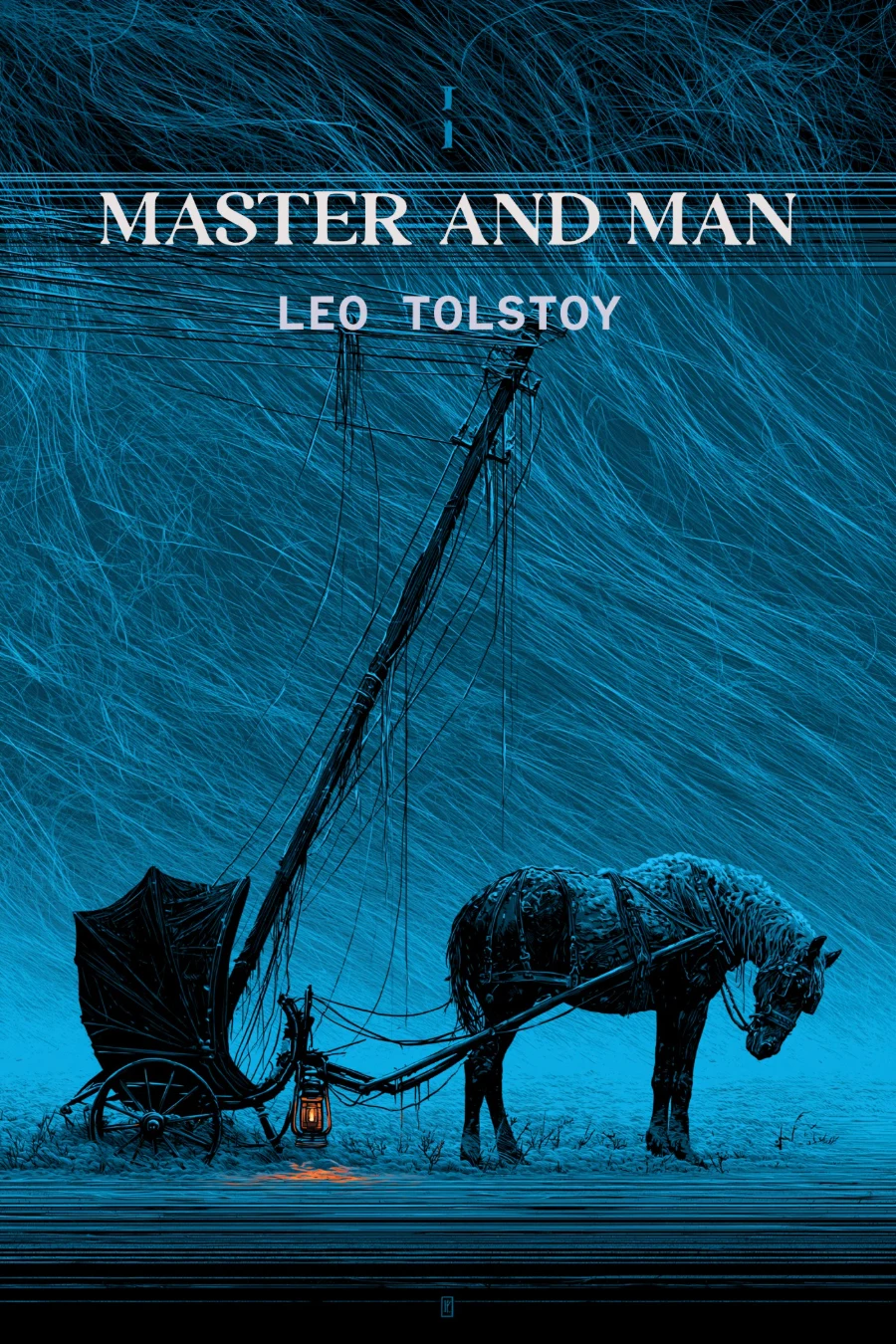
Vasili Andreevich Brekhunov, a prosperous village merchant, decides to set out for a neighboring estate in the teeth of a developing blizzard to close on a stand of timber before a rival can outbid him. His peasant Nikita, hired by the year for a wage Vasili keeps low, hitches the sleigh. The horse is good. The road is familiar. The merchant has made the calculation a hundred times. But the snow comes faster than the calendar predicted, the road effaces itself, and after several hours of circling back to the same crooked telegraph pole the two men understand they are lost — and that the temperature is still falling.
Tolstoy wrote Master and Man in 1895, late in the period of his religious conversion, and it is one of the supreme achievements of his short fiction. The story works on three layers simultaneously. As a survival narrative it is documentary in its precision — the wind direction, the depth of the drifts, the specific way a horse refuses a slope when it cannot see the bottom. As a study of class it is merciless — the merchant who has always treated Nikita as a tool discovers, hour by hour, what kind of human being has been pulling his sleigh. As a religious parable it asks the question Tolstoy spent his last decades on: what does a soul, faced with its account, finally do?
Master and Man rewards readers who admire The Death of Ivan Ilych and want to see Tolstoy work the same machinery on different material — the same patient accumulation of physical detail, the same refusal to allow any consolation that has not been earned, the same final illumination delivered without the comfort of explanation. It is one of the great winter stories in world literature and one of the few that lets cold do the philosophical work that Tolstoy elsewhere did with sermons.
PublisherKafka
LanguageEnglish
Source
short-fiction-leo-tolstoy