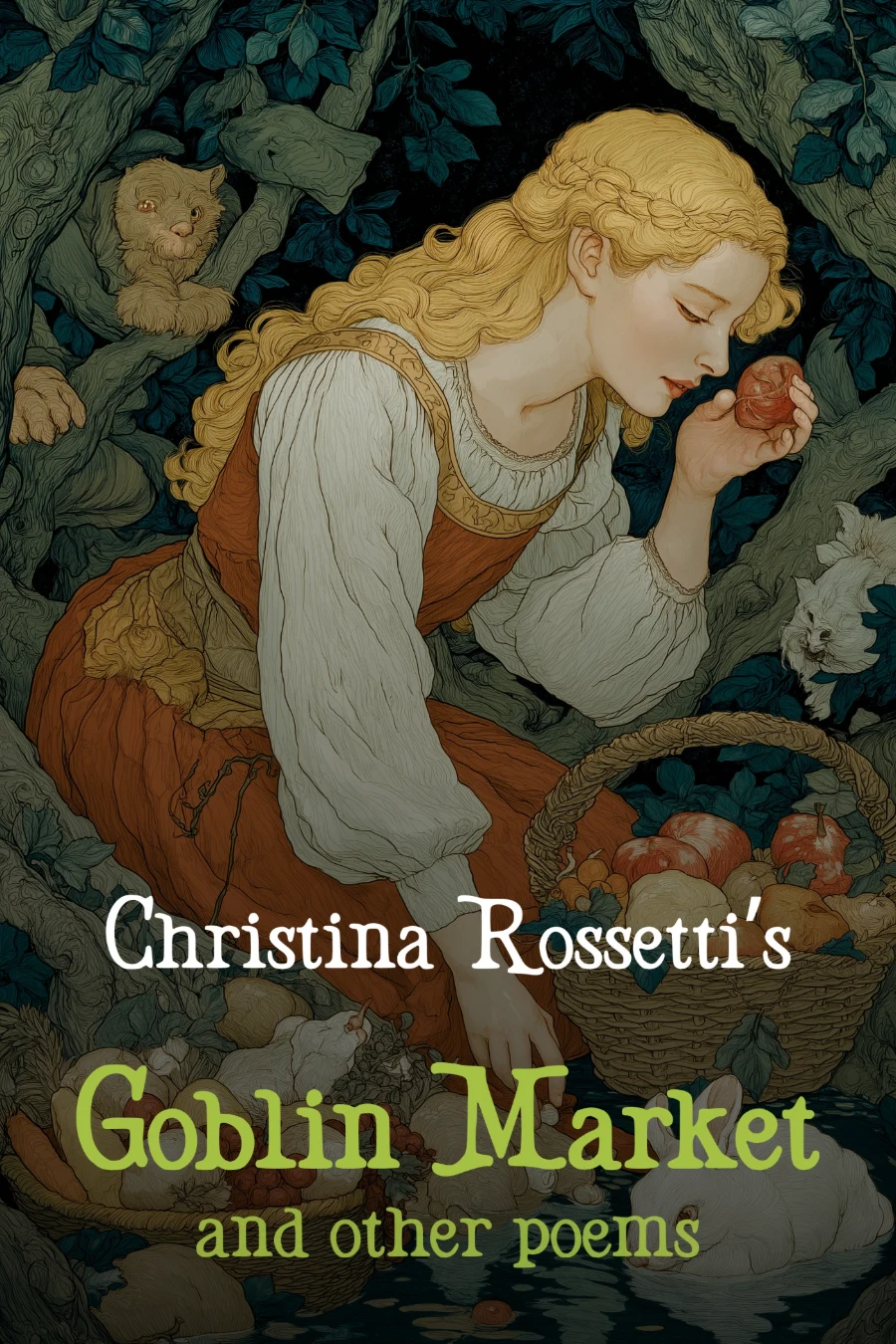
Goblin Market and Other Poems
1h 23m
16,477 words
en
Two sisters live in a world where mysterious goblin merchants call out through the twilight, hawking their enchanted fruits with seductive cries. The danger is real, the temptation palpable, and one sister succumbs to the forbidden while the other watches in horror. What begins as a cautionary tale about desire and restraint quickly becomes something far more complex—a meditation on female sacrifice, the bonds between women, and the price of salvation in a world that treats women's appetites as both natural and dangerous.
Rossetti's verse moves with a feverish, hypnotic rhythm that mirrors the goblins' own marketing chants. Her language is simultaneously lush and precise, capable of evoking ripe peaches and plump cherries in one breath, then pivoting to skeletal warnings and wasted bodies in the next. The other poems in this collection share this peculiar Victorian tension between sensuality and denial, exploring religious devotion, unrequited love, and the inner lives of women who must navigate a world that demands their silence. There's a gothic undercurrent throughout—death maidens, renunciation, and spiritual longing rendered in verse that feels both deeply personal and mythically resonant.
This collection endures because Rossetti understood how to make moral questions feel visceral rather than abstract, and how to write about faith and doubt without sacrificing emotional truth. The title poem has been read as everything from a Christian allegory to a proto-feminist text about female solidarity, and its ambiguities support multiple interpretations without collapsing into incoherence. These are poems that reward readers who appreciate formal precision married to genuine feeling, and who recognize that Victorian propriety often concealed rather than eliminated desire, rage, and spiritual hunger.
PublisherMacmillan and Co. (1862)
LanguageEnglish