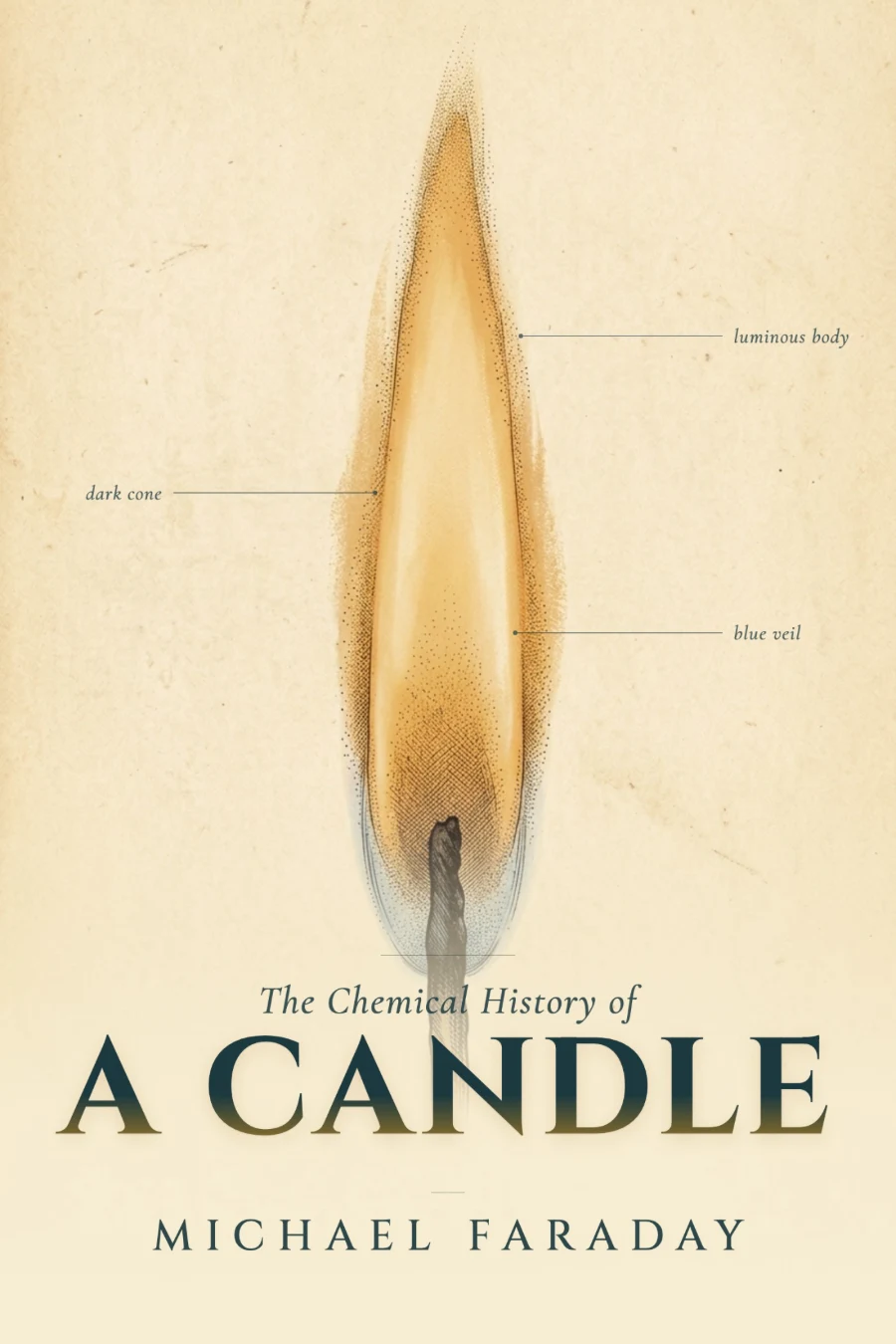
The Chemical History of a Candle
3h 28m
41,527 words
en
Before a juvenile audience at the Royal Institution in 1848, a scientist lights a paraffin candle. With this single object, Michael Faraday sets out to explain the fundamental principles of chemistry and physics. He traces the methods adopted by humanity to illuminate the night, from primitive pine-torches and Etruscan clay lamps to blazing Eastern bitumen and the whale fat of northern huts.
Over the course of six Christmas lectures, Faraday dismantles the mystery of fire. He breaks down how matter changes state, outlines the specific physics of combustion, and demonstrates the behavior of gases. His method relies entirely on observation and physical experiment, forging a chain of reasoning "atom by atom, link by link," until the laws governing a household flame are laid bare.
*The Chemical History of a Candle* established a baseline for Victorian science communication, shaping the modern practice of the public lecture. This edition includes Faraday’s original supplementary notes and an additional lecture on platinum.