Brat Farrar
7h 4m
84,734 words
en
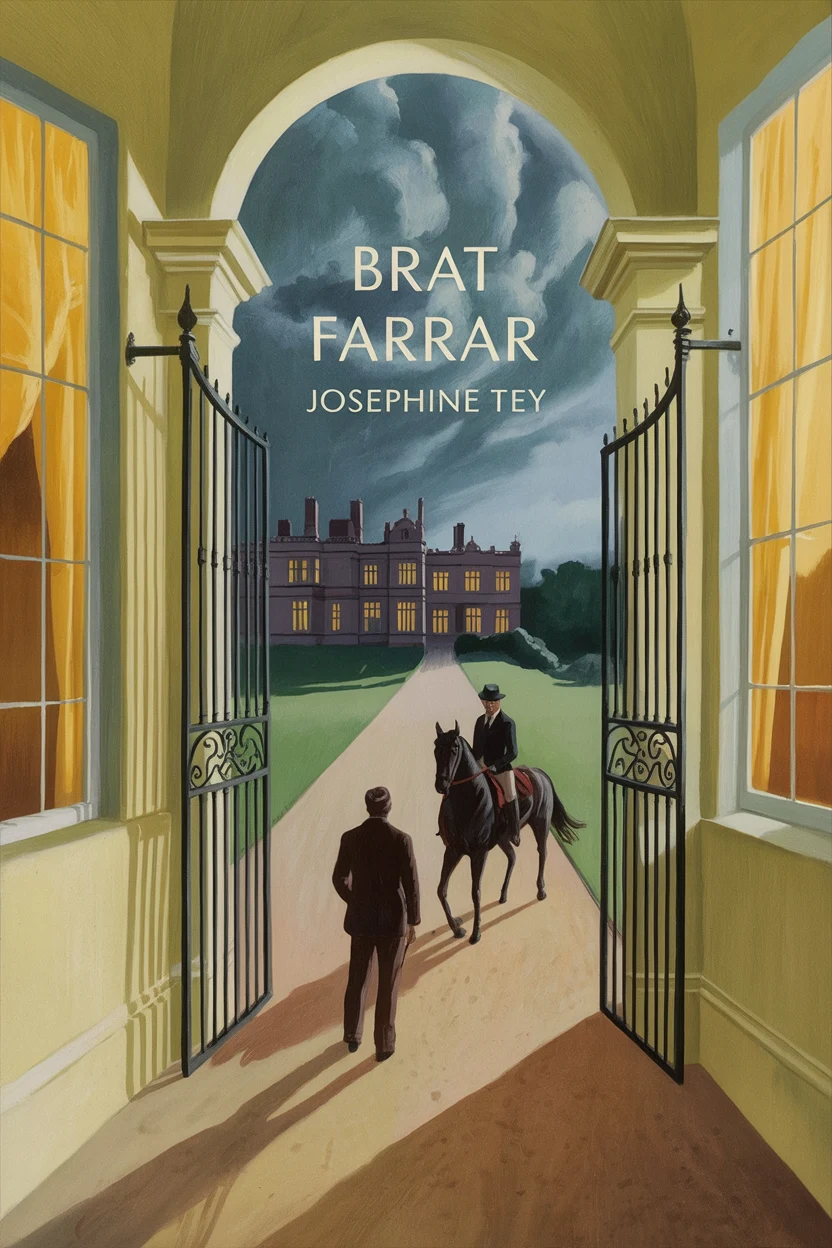
A young man is coached to impersonate the missing heir of a wealthy English family. He arrives at the country estate and successfully fools Aunt Bee, inserting himself into a comfortable household routine of soup, sibling arguments, and Newmarket racing lists. But as the imposter secures his stolen identity and the coming-of-age inheritance that accompanies it, he realizes a dangerous problem: the real heir did not merely run away.
Living under the same roof as Bee and his supposed siblings—Simon, Jane, and Ruth—the fake heir must maintain his deception while quietly investigating a buried crime. If the original heir was murdered, the killer is likely sitting across from him at the dinner table, and that killer knows exactly who the imposter isn't.
Josephine Tey published this novel in 1949, diverging from the traditional puzzle-box mystery to detail the mechanics of a long con. It remains a foundational text of mid-century British crime fiction.