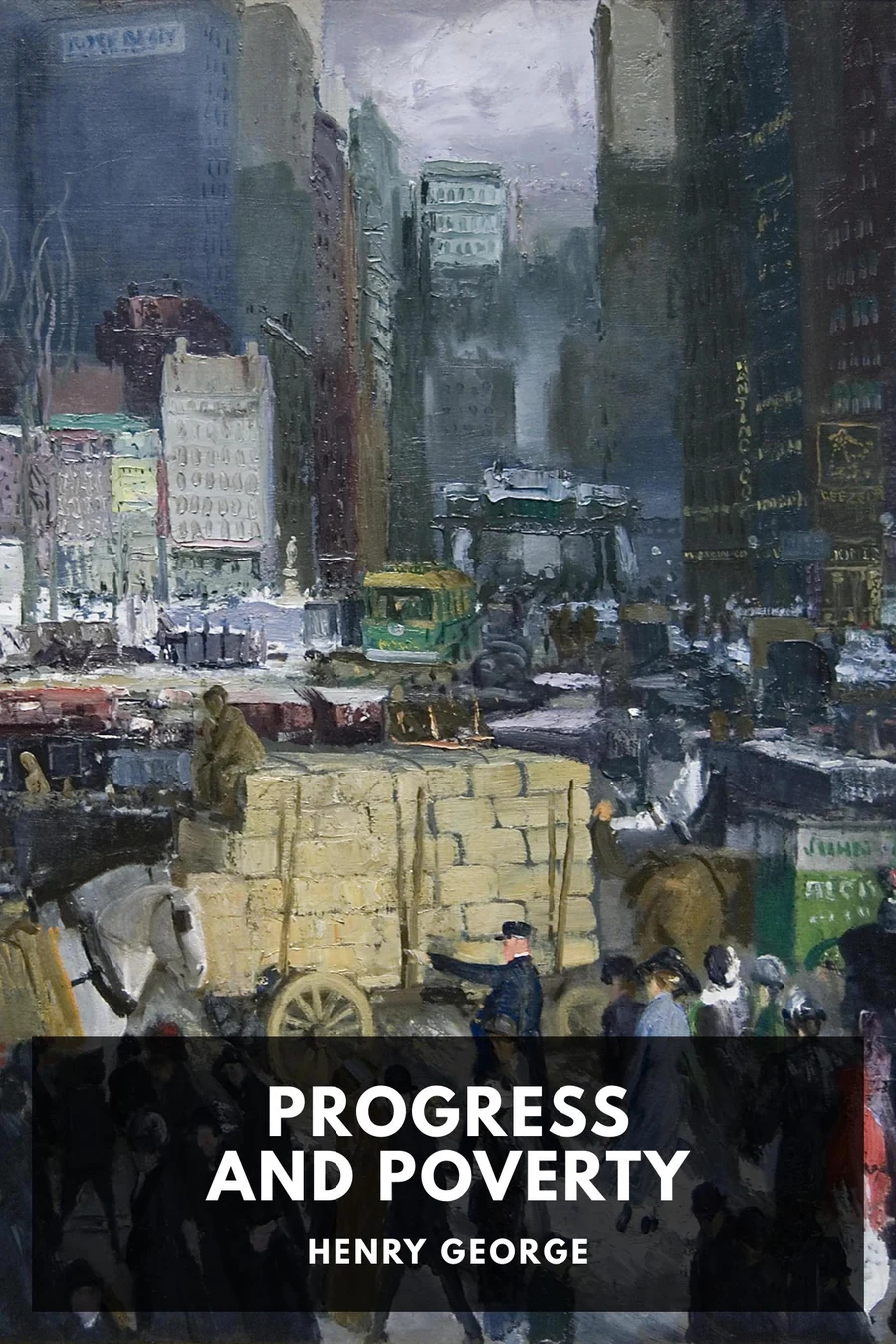
Progress and Poverty
Progress and Poverty, first published in 1879, was American political economist Henry George’s most popular book. It explores why the economy of the mid-to-late 1800s had seen a simultaneous economic growth and growth in poverty. The book’s appeal was in its balance of moral and economic arguments, challenging the popular notion that the poor, through uncontrolled population growth, were responsible for their own woes. Inspired by his years living in San Francisco and his own experience with privation, George argues instead that poverty had grown due to the increasing speculation and monopolization of land, as landowners had captured the increases in growth, investment, and productivity through the rising cost of rent. To solve this, George proposes the complete taxation of the unimproved value of land, thus returning the value of land, created through location, to the community. This solution would incentivize individuals to use the land they own productively and remove the tendency to speculate upon land’s increasing value. George’s argument was profoundly liberal, as individuals retain the right to own land and enjoy the profits generated from production upon it. Progress and Poverty was hugely popular in the 1890s, being outsold only by the Bible. It inspired the Single Tax Movement, and influenced a wide range of intellectuals and policymakers in the early 1900s including Leo Tolstoy, Albert Einstein, and Winston Churchill.