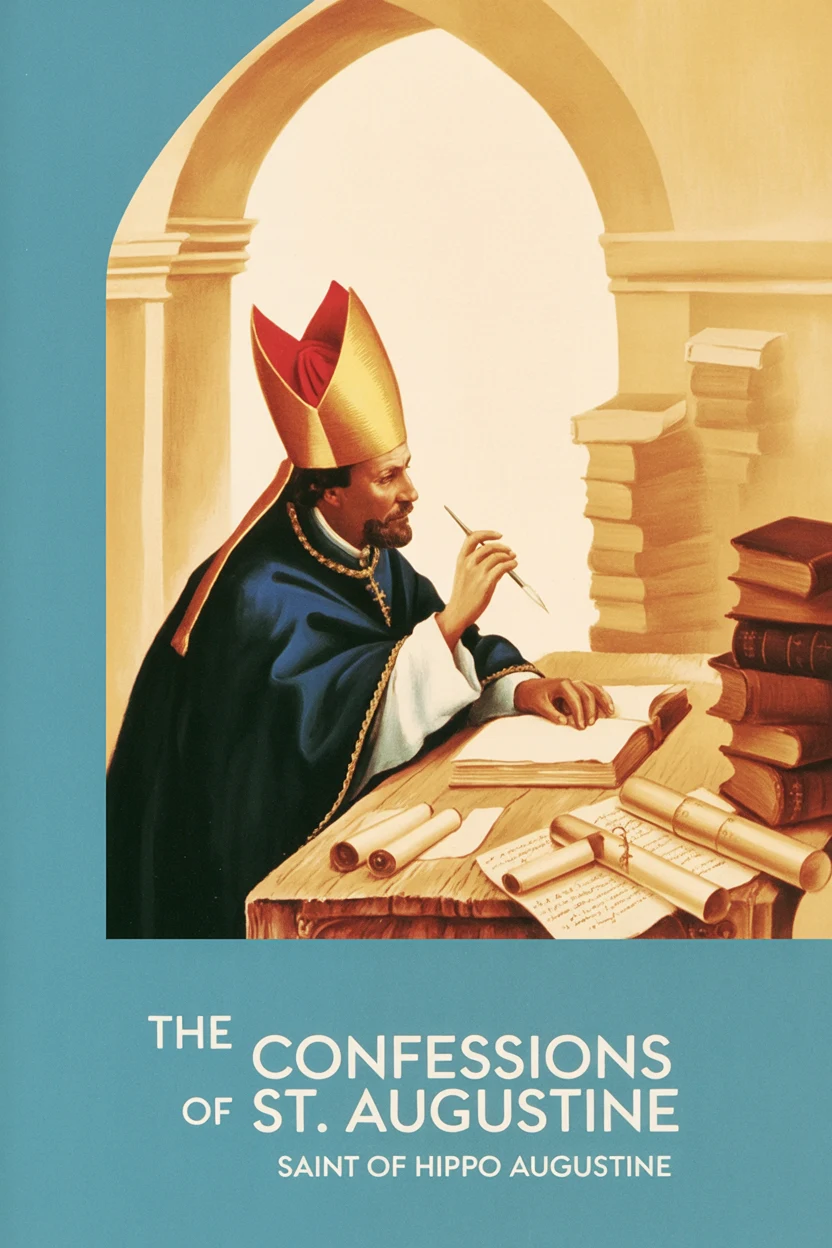
The Confessions of St. Augustine
Translated by Edward Bouverie Pusey
9h 20m
111,801 words
en
In the late fourth century, a Catholic bishop in North Africa writes a direct prayer to God. Before he was the Bishop of Hippo, Augustine was a man divided: a scholar chasing worldly ambition, paralyzed by religious doubt, and bound by his own lust. Here, he recounts the years from his youth in Roman Algeria to the moment of his conversion, detailing the philosophical dead ends and earthly attachments that kept him from faith.
Across thirteen books, he tracks the mechanics of his own mind. He questions how a mortal can contain the divine, asking, "what room is there within me, whither my God can come into me?" It is a strict accounting of a restless heart, written not to defend his public authority, but to lay his flaws bare before his creator.
Considered the first Western autobiography, the text established a framework for Christian theology and the written examination of the self. Translated by Edward Bouverie Pusey.